
A leak does not always mean new pipes
Old pipes invite a big job. The better question is whether the pipe you have can keep doing its job. One pinhole in an otherwise clean copper line is a repair. A third leak in a year, from a third spot, tells a different story.
Repiping is a large project, so we start by finding out what you have and how it is behaving. Sometimes the answer is a smaller fix. Sometimes patching only postpones the larger project. Our 24/7 line is open if a pipe lets go in the meantime.
Repair a section or replace the system
This side-by-side shows how we usually separate the two.
| What you see | Points toward a repair | Points toward a repipe |
|---|---|---|
| Leaks | One or two, far apart, in clean pipe | Repeated leaks at different spots |
| Water color | Clear water, even after sitting | Brown or rusty water at first draw |
| Pressure | Normal at most fixtures | Weak at several taps, worse over time |
| Visible pipe | Smooth, with no scale or green crust | Heavy rust, scale, flaking or bulges |
| Material | Copper or PEX in good shape | Galvanized steel, aging CPVC, or a known problem pipe |
| Plans | Short-term hold on a rental or flip | Long-term home where you want it handled once |
Pipe types that raise the repipe question
Different eras used different materials, and each fails in its own way.
- Galvanized steel. Rusts from the inside, narrows the bore and strangles flow before it leaks.
- CPVC. Becomes brittle with age and heat, and often cracks at fittings.
- Polybutylene. Gray or blue plastic installed in many US homes in the 1980s and 1990s. It is worth checking for if your house is from that era.
- Older copper. Thin walls and water chemistry can lead to pinholes.
- Mixed repairs. Several materials joined over decades create weak transitions.
How a repipe actually goes
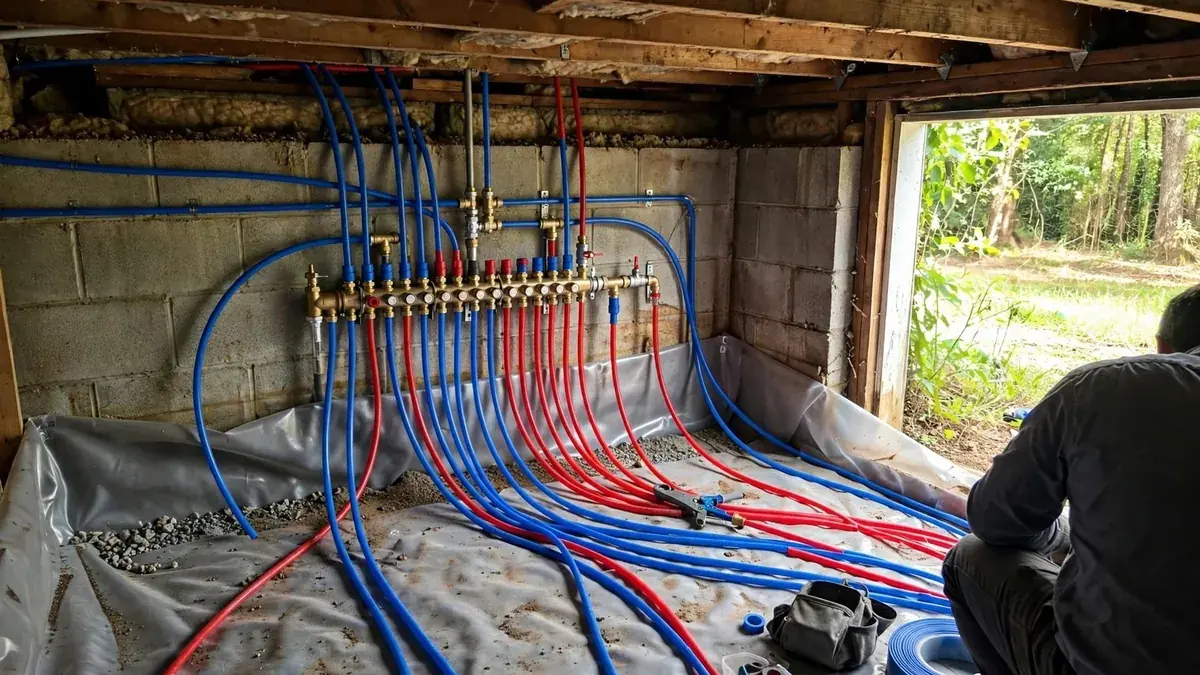
We start with the water. After the main is closed and the system drained, we map the new route for the supply lines, usually copper or PEX, and decide where walls and ceilings need access.
New lines run to each fixture, sized for the demand. Hot and cold go to the same fixtures as before, with shutoff valves added where they are missing. We reconnect the water heater, test the system at pressure, and check every joint before the walls are closed.
Drywall repair and paint are separate trades. We tell you which openings we are making and where, so you can plan the finish work.
Compact postwar houses and what changed inside them
Mountlake Terrace grew from a former WWII landing field. In 1949, developers began building the first 250 homes, two-bedroom cinderblock houses about 20 by 30 feet, built on an assembly line. Population doubled between 1950 and 1960, and early homes were later renovated and expanded, with larger homes added.
That history matters for pipes. Homes of that era commonly had galvanized supply lines, and many have since been partly replaced with copper or PEX. A house that was added onto may have new pipe feeding old, or the other way around. Ask for a pipe-material check before you decide, and we will tell you what we see where the pipe is exposed instead of assuming.
Replumbing through the attic after a slab leak
When a supply line fails under a concrete floor, there are two options. One is to cut the slab and fix the line. The other is to run a new line overhead and leave the old one in the ground.
Rerouting avoids the floor, the dust and the flooring repair. It adds pipe in the attic or walls, so it makes sense when the layout allows. To find out whether the slab line is the problem in the first place, see emergency leak detection.
Supply lines, drain lines, or both
Supply lines bring water in under pressure, and drain lines carry waste out by gravity and vent. They age differently. Rusty water and low pressure are supply problems. Slow drains, gurgling and sewer smell are drain problems.
If your drains keep backing up, the answer may not be a repipe at all. Our sewer line repair work covers the line outside the house. For indoor supply and drain replacement as part of a remodel, we can quote both together.
What the code means for new pipe
Washington adopts the 2021 edition of the Uniform Plumbing Code, published by IAPMO, with state amendments. For you, that means materials, sizing, supports and installation methods have to meet adopted rules, not just whatever is easiest.
Ask any contractor how the work meets code before you hire. We explain our method and materials in plain terms before we begin. Neighbors in Lynnwood, WA can call the same number.
What changes the price of repiping
Repipe pricing varies more than almost any plumbing job. We look at the house first and then tell you the number.
More bathrooms and fixtures mean more pipe and more connections.
Open attics and crawlspaces are faster than finished walls and slab floors.
Copper and PEX have different material and labor costs and different strengths.
Replacing only hot lines or one section is a smaller job than the full system.
Opening and patching walls is separate work, and it can be a large share of the project.
Homeowners policies usually cover sudden accidental damage, like a burst pipe, and usually do not cover wear, corrosion or gradual leaks, so a planned repipe is typically not covered. Check your own policy. We give a clear price before work starts, so call (206) 864-6558 for your number.
Call (206) 864-6558 and we set up a same-day visit when available, then give a clear price before work starts.
Repiping questions homeowners ask us
One leak in an otherwise sound pipe is a repair. Repeated leaks in different spots, rusty or brown water, weak pressure at several fixtures and visible corrosion on exposed pipe point toward a repipe. We look at the pipe you can see and explain what it says about the rest.
Yes, in some houses. Hot lines wear faster because heat speeds corrosion and scaling, so some owners start there. The catch is that a mixed system leaves old cold pipe in place, so we discuss which choice fits your layout and the condition of the cold side.
CPVC can turn brittle with age, heat and some chemical contact, and it tends to crack at fittings. If yours is cracking or leaking, replacement is worth pricing. If it is intact, we look at its condition and tell you honestly what we see.
Often, yes. A new supply line can run through the attic or walls and drop to the fixtures, so the old line under the slab is abandoned instead of dug up. We confirm the layout and explain the tradeoffs.
Yes, for part of the work. We plan sections so the water is off for as short a period as the job allows and tell you ahead of time when to expect it. Plan a few hours with no water on the day the lines are connected.
A repipe is the owner's decision. If you see rusty water or repeated leaks, tell your landlord or property manager. We are glad to speak with them and explain what the pipes need.
Yes. If you only need one run replaced, say a leaking section under a sink or a stretch of pipe in the basement, we price that job on its own. It does not have to become a whole-house project.
Standards and sources
These public references sit behind the rules and checks this page mentions.