
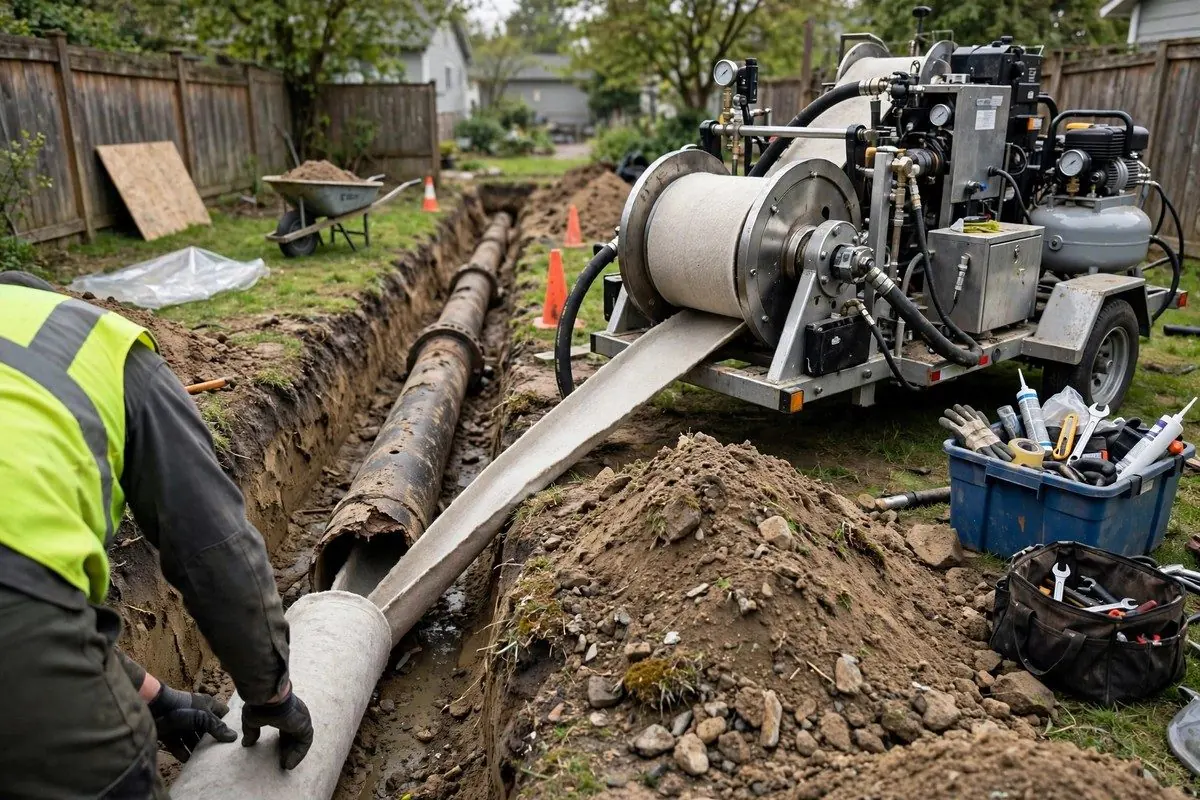
Repair does not have to mean a trench across the yard
If sewage is backing up or a sewer smell is filling the house, call now. Our line is open 24/7, and while you wait you can stop water use and keep people out of the affected rooms.
Many people assume that a broken sewer pipe means the yard gets torn up from house to street. Sometimes it does. Often the damage is in one spot, a cracked joint, a section pulled apart or a short sag, and a targeted repair is enough. The choice depends on what the pipe looks like inside, so the first move is to look.
Spot repair, lining or replacement: how the options compare
These are the general options for a damaged sewer lateral. Which one applies depends on the pipe and the layout of your property.
| Option | Fits when | Trade-off |
|---|---|---|
| Spot repair | One cracked joint or a short broken section in otherwise sound pipe | Leaves the rest of the older pipe in place |
| Pipe lining | The pipe is intact enough to hold a liner and has no major offsets | Does not fix a collapsed or heavily offset pipe |
| Partial replacement | A damaged stretch such as the part under a driveway or near the house | Leaves remaining pipe with its own age |
| Full lateral replacement | Cracks along the line, repeated roots or a long sag | Biggest job and the most disruption |
| Cleaning only | Damage is minor and the problem is buildup | Roots and grease can return |
Call (206) 864-6558 to describe the symptoms, and we will explain the repair options and the price before any work starts.
Broken sewer line with an active backup: first moves
A damaged pipe can leak waste into the soil or push it back into the house. Both are urgent.
- Stop using water in the house, including toilets, sinks and the washer.
- Keep everyone away from standing sewage and wet floors.
- If the backup is near electrical equipment, do not touch it. Turn off a breaker only if the area is dry and safe.
- Note any wet or sunken patches in the yard and any sewer smell outside.
- Call (206) 864-6558 and tell us what the line did before it failed.
How a sewer repair gets decided and carried out
A repair begins with evidence, not guesswork.
Look inside the pipe
A camera on a flexible cable shows cracks, roots, offsets and sags. We locate the problem spot along the line.
Choose the repair
With the camera result in hand, we explain the options and the trade-offs, then give a clear price before work starts.
Check the permit question
We tell you what the work involves, and you or we ask the city permit center what applies.
Repair and test
The damaged section is repaired or replaced, then water is run through the line to confirm it flows.
Houses from the 1949 build-out and the drain pipe inside them
Mountlake Terrace began as a veterans' housing project, with the first 250 homes built from June 1949. Houses from that era commonly had cast iron or clay drain lines, and many have since been partly replaced. Where old and newer pipe meet, joints can shift and roots can enter. Ask for a camera inspection and a pipe-material check instead of assuming what your house has.
Repairs may need a permit. The city permit center lists Building, Electrical, Mechanical, Plumbing and Fire permits and posts plumbing application checklists. Permit rules vary, so ask the city permit center at 425-776-1161 before the work starts.
Signs the pipe is damaged, not just clogged
A clog clears. A damaged pipe keeps coming back. These signs point to damage.
- Repeat backups. The line is fine after cleaning, then blocked again in weeks or months.
- Slow drains throughout the house. A sag or partial collapse limits the flow.
- Soggy or sunken yard spots. Waste water may be leaking into the soil.
- Sewer odor outdoors or in the house. A break can let gas out near the foundation.
- Roots on every cable pass. Roots need a gap to enter.
- Gurgling or a P-trap that will not hold water. A vent or line problem pulls the water out.
What changes the price of a sewer line repair
Sewer repair ranges from a small fix to a major project, so the factors matter.
A single joint is a different job from a long stretch of lateral.
Pipe under a driveway, patio or tree needs more work than a clear lawn.
Spot repair, lining and replacement each have different labor and materials.
Failing old pipe may need more replaced than the visible damage.
Permit steps, backfill and surface repair add to the work.
We give a clear price before work starts, so call (206) 864-6558 for your number. Homeowners policies usually cover sudden accidental damage but typically exclude wear, age and root intrusion. Check your own policy.
What to have ready when you call
A few details speed up the visit and sharpen the plan.
Note where the capped pipe sits, even if you never open it.
If a previous visit looked at the line, tell us what it showed.
If you are under contract, share the timeline so we can plan the work.
Mention trees, a driveway or a patio above the line.
When did they start, and how often do they return?
Smells, buyers and what to read next
A sewer smell in a bathroom, or a P-trap that no longer holds water, can lead back to a damaged or leaking line. A camera look separates a dry trap from a real fault. Read about clearing a main line if you are not sure the pipe is broken.
For homes just south of us, see our Lynnwood page.
What homeowners ask before a sewer repair
Yes. The emergency line at (206) 864-6558 runs 24/7. A broken sewer pipe that is sending waste into the house or the yard at night needs a call right then. We can stop the backup, tell you what we find and book the repair as soon as same-day openings allow.
Often, yes. If the camera shows one cracked joint or one short break in otherwise sound pipe, a spot repair can make sense. If the pipe is cracked in many places or has settled along most of its length, replacing more of it may be the better choice. We will show you what we see before you decide.
A belly is a low spot where the pipe has sagged, usually because soil settled beneath it. Water and waste pool there instead of flowing on, which causes repeat clogs. Cleaning helps for a while, but only repair or replacement removes the sag.
Permit rules vary, so ask the city permit center before the work starts. The city lists plumbing permit types and application checklists, and we can tell you what we plan to do so you can ask the right question.
A broken sewer line is normally a building issue, so call your landlord or property manager first. Your lease decides who pays. We can talk with the manager, explain what the camera shows and give a clear price before work starts.
Usually clearing comes first, with a camera look to show whether the pipe is damaged. If the camera finds a break, repair follows. If it finds only buildup, cleaning or jetting may be enough.
Yes, call us and mention your contract dates. A camera look can show roots, cracks and sags before closing, so you can discuss repairs with the seller. We offer same-day appointments when available.
Standards and sources
These public references sit behind the rules and checks this page mentions.