
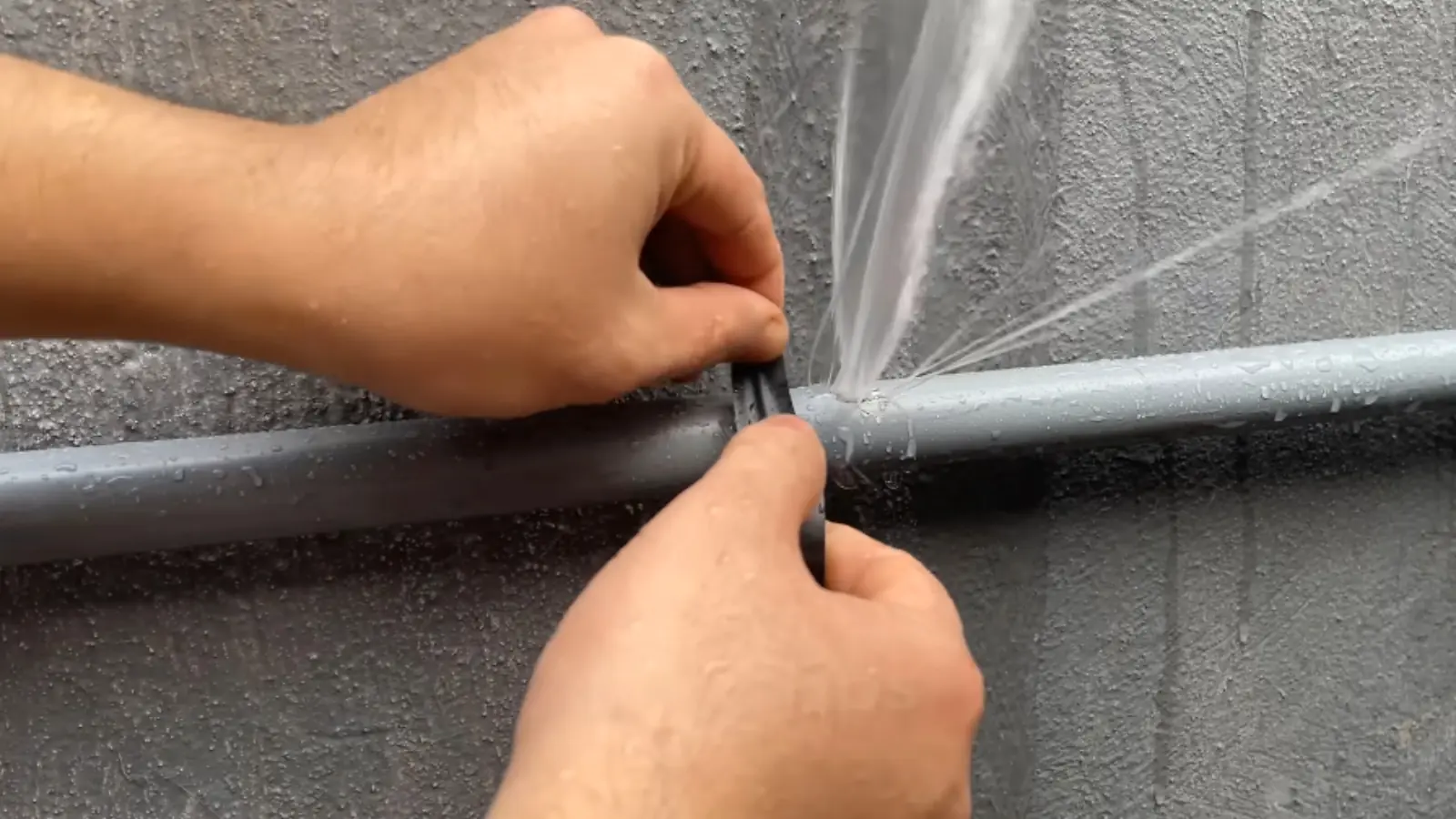
Stop the flow, then make one phone call
A burst is an emergency, and our line is open 24/7. While you wait, your job is simple: close the main, kill nearby power only if it is safe, and move what you can out of the water.
Speed matters because a broken supply line delivers a steady flow under pressure. The sooner the main is closed, the less drywall, insulation and flooring gets soaked. The dispatcher stays on the line until you know the water is under control.
A pipe is spraying or flooding right now
Follow these in order. Stop at any step where you are not safe.
- Close the main shutoff valve inside the house. If you cannot find it or it will not turn, do not force it.
- Open a faucet at the lowest point in the house to relieve pressure and drain the line.
- Switch off the water heater breaker or turn the gas control to pilot if the hot line is broken, so the tank does not run dry and overheat.
- Stay out of rooms where water is near outlets, a panel or appliances. Do not touch electrical gear while standing in water.
- Call (206) 864-6558 and tell us where the water is coming from and what you have shut off.
How pipes fail and what each break looks like
The cause shapes the repair. A freeze split behaves differently from corrosion.
| Pipe or fitting | How it fails | What the repair usually involves |
|---|---|---|
| Copper line | Pinhole from corrosion, or split from freezing | Cut out the damaged section and sweat in new pipe and fittings |
| Galvanized steel | Rusts from inside, then cracks at threads or elbows | Replace the section, often a sign the rest is close behind |
| PVC or CPVC | Cracks at connectors, brittle with age or stress | Replace the connector or run of pipe, and check the supports |
| PEX | Splits if frozen, or leaks at a crimp or fitting | Replace the damaged run and redo the connections |
| Shutoff or supply stop | Valve body cracks or stem packing fails | Replace the valve, which may need the main closed first |
| Soldered joint behind a wall | Poor workmanship or old flux lets go | Open the wall, remake the joint, and patch the opening |
How we repair a broken line
We confirm the line is isolated and drained, then find the exact break. Water travels along pipe and framing, so the wet spot is often not where the failure sits.
We open only what we need. For a pinhole or a split fitting, that means cutting out the damaged piece and installing new pipe with proper fittings. When the pipe around the break is thin, scaled or soft, we show you and discuss replacing a longer run instead of patching it.
Then we restore pressure, check every joint for weeping, and confirm the fixtures work. You get a clear price before work starts, and we explain if drywall or flooring will need a separate trade afterward.
Leaks that look different from a classic burst
Not every break sprays. A pipe under the house after other work, a slow weep behind a shower valve, and water behind a garage refrigerator supply line all start small. A bubble in the paint, a sound of running water in a quiet house, or a stain that keeps growing can all be a burst in disguise.
If you cannot see where the water is coming from, we locate it first. Our emergency leak detection work pinpoints the pipe before anyone opens a wall. And when a whole system keeps failing, replacing the old supply lines is the question to ask us about.
What causes pipes to burst, and what you can check today
Age, cold, pressure and past workmanship account for most breaks.
- Freezing. Water expands as it turns to ice, and the split often shows up when the line thaws.
- Age and corrosion. Old galvanized and thin copper wear from the inside until a pinhole appears.
- High water pressure. A failed pressure regulator on the main can stress every joint in the house.
- Shifted or unsupported pipe. Pipes that rub framing or hang loose crack at fittings over time.
- Poor soldering or glue work. A joint made without enough heat or cleaning can fail years later.
- Water hammer. A slamming valve sends a shock through the line, so a hammer arrestor helps.
Winter in the Puget Sound lowers the margin
The Puget Sound has a wet fall-to-spring season and occasional winter freezes. The pipes that suffer are the ones outside the heated envelope: hose bibs, crawlspace lines and garage supply runs, plus any pipe in an exterior wall without insulation.
Before a cold snap, disconnect hoses, shut off and drain exterior spigots if you have an interior shutoff, and keep garage and crawlspace vents closed. If a pipe freezes, close the main before it thaws. Do not use a torch or open flame, since that starts fires and can crack the pipe.
When the break is on the city side of the meter
In Mountlake Terrace, the city runs the water and sewer system up to your property. If water is bubbling from the street, the parking strip, or the ground near the meter box before the shutoff, that is a city line break. Call City Public Works at 425-670-8264, open 7 a.m. to 3:30 p.m., Monday to Friday. After hours, call the Snohomish County non-emergency line at 425-407-3999.
If the water is on your side, inside the house or on the pipe past the meter, it is ours to repair. If you are unsure, call us anyway. We tell you which side it is, and for a buried-line failure see emergency water line repair.
What changes the price of a burst pipe repair
No two breaks cost the same, and we do not guess a figure over the phone.
A visible basement line is simpler than one behind tile or under a slab.
Copper, PEX, PVC and galvanized each need different fittings and labor.
A single pinhole is a small repair. Long runs of corroded pipe call for a larger fix.
Cutting drywall, lifting floors or entering a tight crawlspace adds time.
Night or weekend dispatch can change what a visit involves.
Homeowners policies usually cover sudden accidental damage like a burst pipe, and usually do not cover wear, corrosion or gradual leaks, so check your own policy. We give a clear price before work starts. Call (206) 864-6558 for your number.
Dispatch is 24/7 at (206) 864-6558, with same-day appointments when available.
Burst pipe questions, answered plainly
Yes. Our dispatch line is staffed 24/7, including Saturdays, Sundays and overnight. Close the main, call us, and we set up a same-day visit when available. If the break is on the city side of your meter, we will say so and point you to the right number.
Look where the line enters the house, often in a garage, utility room, basement or crawlspace, or at the meter box near the street. A round handle turns clockwise to close. A lever handle closes when it sits crosswise to the pipe. If it will not move, do not force it. Call us.
Often yes. A pinhole in copper, a cracked elbow, a split PVC connector or a failed solder joint can usually be cut out and replaced with new pipe and fittings. If the surrounding pipe is corroded, repairing one spot just moves the failure down the line, and we say so.
Policies usually cover sudden accidental damage, such as a pipe that bursts, and usually do not cover wear, corrosion or gradual leaks. Wording varies, so check your own policy. We can describe what we found and what we repaired in plain language for your claim.
Your lease decides who pays. Tell your landlord or property manager right away and close the fixture or main valve if you can reach it. We can speak with the property manager and explain the repair.
It can be. Disturbed pipes, a loose clamp, a stressed joint or a fitting nudged during a water heater swap can fail days later. We look at where the break is and what changed nearby, and we describe it honestly.
Standards and sources
These public references sit behind the rules and checks this page mentions.