
Water is spreading right now
If water is actively dripping through a ceiling, pooling on a floor or running somewhere you cannot see, treat it as an emergency. Our line is open 24/7, and the steps below protect your home while you wait for us.
- Shut off the main water valve, usually near the meter or where the line enters the house.
- Turn off power to any wet area only if the breaker panel is dry and you can reach it without stepping in water.
- Set a bucket under any drip and lift rugs, boxes and electronics off wet floors.
- Stay out from under a bulging or sagging ceiling, since it can drop without warning.
- Call (206) 864-6558 and tell the dispatcher what you saw, heard and where.
How a pinpoint survey narrows the search
We start by sorting the problem into one of three zones: supply lines under pressure, drain lines, or water coming from outside the structure. A closed-system pressure test on the supply side tells us whether the leak is on that side at all.
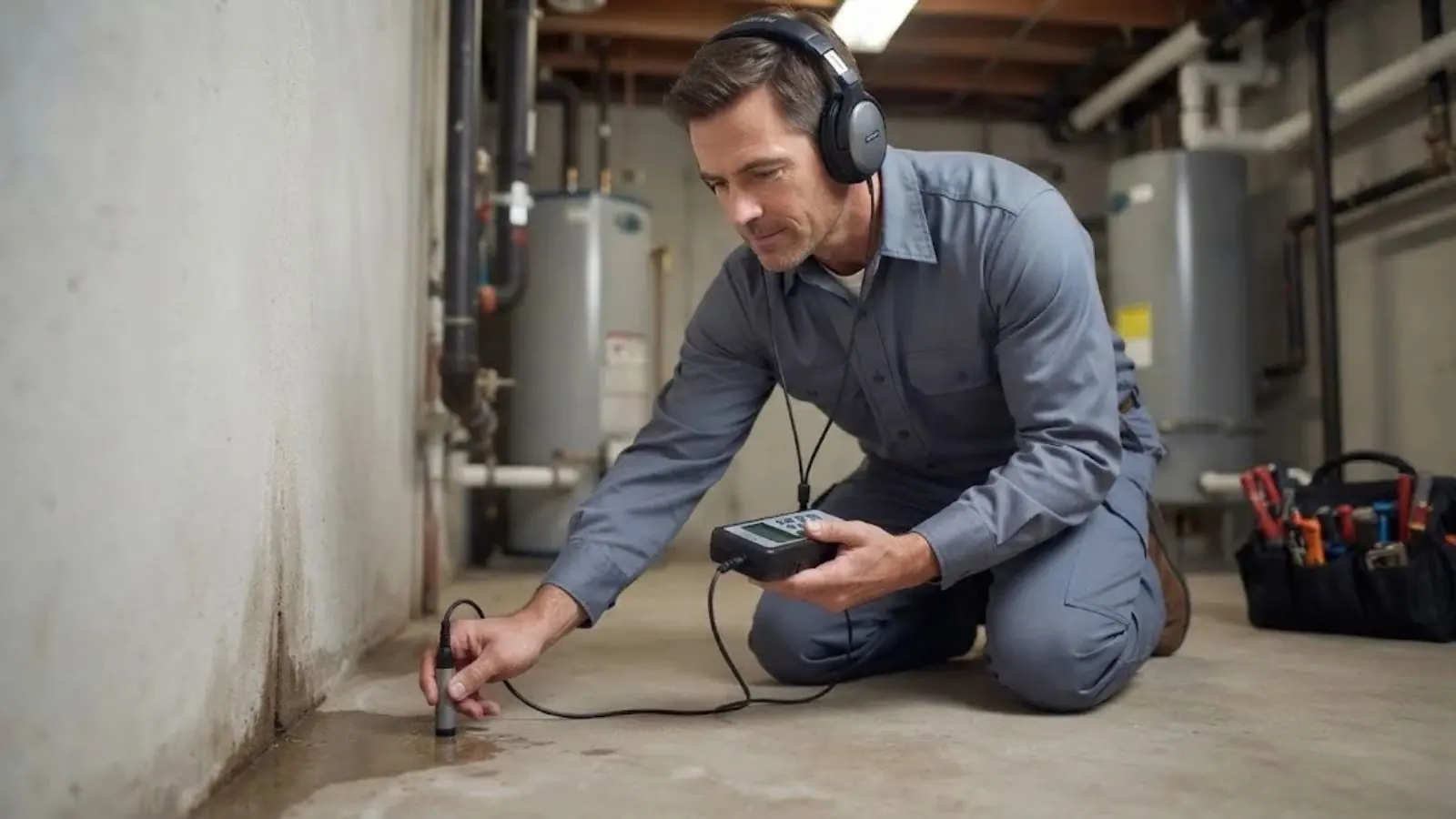
Next comes listening. A sensitive microphone on the floor, wall or valve picks up the hiss of escaping water, and the sound is loudest directly over the leak. Moisture meters and thermal imaging back that up by showing cooler, wetter material behind a finish. Where the pipe is hot, a warm patch on the slab gives it away.
When two methods point to the same spot, we mark it on the surface. That mark is what keeps the opening small, whether it is a drywall patch or a saw cut in concrete.
Run the all-fixtures-off meter test
This takes a few minutes and tells you if there is a leak at all. Tell the dispatcher what you saw.
Stop all water use
Close every tap, make sure no one flushes, and pause the dishwasher, washer, ice maker and irrigation.
Find the meter
It sits in a box near the street or property line. Lift the lid carefully and wipe the glass.
Read the dial and the small leak indicator
A spinning triangle or wheel with everything off means water is moving somewhere.
Wait, then compare
Check again after the wait. If the numbers changed, close the main and see whether the dial stops. If it stops, the leak is inside your side of the system.
What the symptom usually points to
Sorting symptoms narrows where we look first. Treat this as a guide, not a diagnosis.
| What you notice | Likely source | What to do first |
|---|---|---|
| Meter spins with all fixtures off | Running toilet, irrigation, or a leak on the line to the house | Close the main and see if the dial stops, then call |
| Ceiling stain or sag | Bathroom above, or a supply line in the wall | Catch the water, shut off the main, call |
| Sound of running water under the floor | Leaking supply or drain in the crawlspace | Shut off the main and stay out of wet crawlspaces |
| Warm or hot patch on the floor | Hot line leaking beneath the slab | Shut off the water heater supply and call |
| Soggy or unusually green strip of yard | Buried line between meter and house | Close the main and mark the spot |
| Musty smell with no visible water | Slow leak inside a wall or cabinet base | Call for a moisture check before mold builds |
When the water bill climbs and nothing looks wet
A quiet toilet is the most common hidden cause. A worn flapper lets water slip into the bowl all day with no sound, and the meter never stops. Irrigation valves stuck open and an outdoor spigot dripping into a bed do the same thing without any damp inside the house.
The City of Mountlake Terrace supplies water, sewer and stormwater inside city limits and bills every other month. That means a leak can run for a full billing period before the bill shows it. Read your meter yourself between bills, since a dial that is moving at night tells you sooner than a statement does.
If a leak has already pushed a bill up, City Hall utility billing at 425-744-6214 can explain the discount program for households under the county income limit and whether a payment plan fits. We fix the leak, and they handle the account.
Slab leaks and the warning signs on the floor
A slab leak is a pressurized line leaking beneath the concrete floor. Warning signs include a warm spot underfoot, damp baseboards, carpet that stays wet, the sound of running water with nothing on, and a water bill that jumps without a visible reason.
The hot line is the usual suspect when a floor feels warm. We confirm which line is losing pressure before anyone breaks concrete.
Once the spot is marked, there are choices. Saw-cutting the slab reaches the pipe directly. Rerouting a new line through the attic or walls avoids the floor entirely. A repipe replaces the supply lines throughout. We explain each path, who restores the flooring afterward, and give a clear price before work starts. For a house-wide option, see whole-house repiping.
Signs of a leak inside walls, ceilings and crawlspaces
Hidden leaks leave clues if you know where to look.
- Stains that grow after rain-free days. A stain that keeps spreading when the weather is dry points to plumbing, not the roof.
- Paint that bubbles or wallpaper that lifts. Moisture is pushing from behind the finish.
- A bathroom above the stain. Shower pans, tub drains, toilet seals and P-traps leak down into the ceiling below.
- Low pressure at a few fixtures. A leak ahead of the fixtures steals flow from them.
- Sewer smell near the floor. A cracked or loose drain under the house can leak gas and water into the crawlspace.
Buried lines between the meter and the house
Water surfacing in a yard, a soft patch of ground, or a strip of unusually green grass points to a leak on the private side of the line. Pipe tracing and listening let us narrow it down without opening the whole run.
For a failed line that needs replacing, see emergency water line repair. Where the city line ends and your responsibility begins is a question for Public Works, and that page explains who to ask.
What changes the price of leak detection
Detection pricing follows the effort and tools the search needs. We do not quote a number sight unseen.
More bathrooms, floors and pipe runs mean more places to test and listen.
A visible bathroom ceiling leak is quicker than one under concrete or a long buried line.
Metal carries sound well. Plastic and PEX need more pressure isolation work.
Some leaks need acoustic work plus thermal imaging or moisture readings to confirm.
Opening a wall, cutting a slab or digging a yard adds labor, and restoration is a separate question.
Homeowners policies usually cover sudden accidental damage, like a burst pipe, and usually do not cover wear, corrosion or slow leaks. Check your own policy before you call a claim in. We give a clear price before work starts, so call (206) 864-6558 for your number.
When a landlord, utility or insurer sends you to us
Sometimes the trigger is not a stain. A utility alert about constant flow, a landlord reporting water in a unit, an inspection during a home sale, or an adjuster asking for proof of the source all start with a location. We write down what we found and where, so you have something concrete to hand over.
Dispatch answers 24/7 at (206) 864-6558. We handle detection, the repair, or both.
Leak detection questions we hear most
Yes. The dispatch line runs 24/7, so a spreading wet spot at 2 a.m. or on a Sunday gets a real person. If the water is active, shut off the main first and then call. We offer same-day appointments when available and will tell you plainly what can happen tonight and what can wait for morning.
A visual check and a drain snake only see what is exposed. A detection visit uses listening equipment on the pipes, pressure tests to isolate which line is losing water, and a surface scan of the suspect area. The goal is a marked spot on the floor or ground, not a guess.
Usually yes. Water escaping a pressurized line makes a sound that carries through metal pipe and into the floor above it. Plastic pipe carries sound poorly, so we lean more on pressure isolation and moisture readings there. Some jobs need two methods to agree before anyone cuts anything.
Both. If you want only the location because someone else will repair it, say so on the call. If you want the same crew to fix it, we explain the repair path before work starts, including whether drywall, flooring or concrete has to be opened.
That depends on your lease. Tell your landlord or property manager as soon as you see water, and shut off the fixture valve if it is a single fixture. We can talk to the property manager directly and explain what we found.
Check the toilets first, then irrigation, outdoor spigots and any hot tub supply. If all of those are quiet, the leak may be on the line between the meter and the house. That is a buried-line job and we can locate it without trenching the whole yard.
Standards and sources
These public references sit behind the rules and checks this page mentions.