
A small drip is a slow water bill, and sometimes a flood in waiting
Most people treat a dripping faucet as a nuisance. It becomes urgent when water will not shut off, sprays from the stem, or leaks into a cabinet or wall. Our dispatchers answer 24/7, and while you wait for a plumber you can usually limit the damage yourself.
Look first for the small oval or round handle at the pipe under the sink, and turn it clockwise. If there is none or it will not move, close the main shutoff and open the lowest faucet in the house to drop the pressure.
A drip can also hide a cracked cartridge or a worn seat that is already failing. Old faucets seldom get better on their own.
Burst supply stop or spraying valve right now
A fixture that is spraying or a supply stop that has let go can empty a lot of water onto a floor in a short time. These steps come before anything else.
- Close the shutoff valve for the fixture, or close the main water shutoff if the fixture has none.
- Open a faucet at the lowest point of the house to drain pipe pressure.
- Move rugs, boxes and electronics away from the water. If the water has reached an outlet or appliance, leave it alone.
- Switch off the breaker only if the panel is dry and you can reach it without stepping in water.
- Call (206) 864-6558, say which fixture is leaking and tell us if you have shut it off.
Call (206) 864-6558, name the fixture and where the water is coming out, and we will line up the parts.
Which faucet part is failing
The place the water shows up usually points to the part. Match what you see to this table before you call.
| Where it leaks | Likely part | Repair or replace |
|---|---|---|
| From the spout when closed | Worn cartridge, washer or seat | Repair if parts are available |
| Around the handle | Worn O-ring or loose packing nut | Repair |
| From the base of the faucet | Failed body seal or corroded body | Often replace |
| Under the sink at the stop valve | Worn stem seal or loose compression nut | Replace the stop |
| From the showerhead after the tub is off | Cartridge or diverter worn out | Repair at the wall valve |
| From a hose bib at the wall | Worn packing or a cracked body | Repair or replace |
How we repair a faucet that keeps leaking
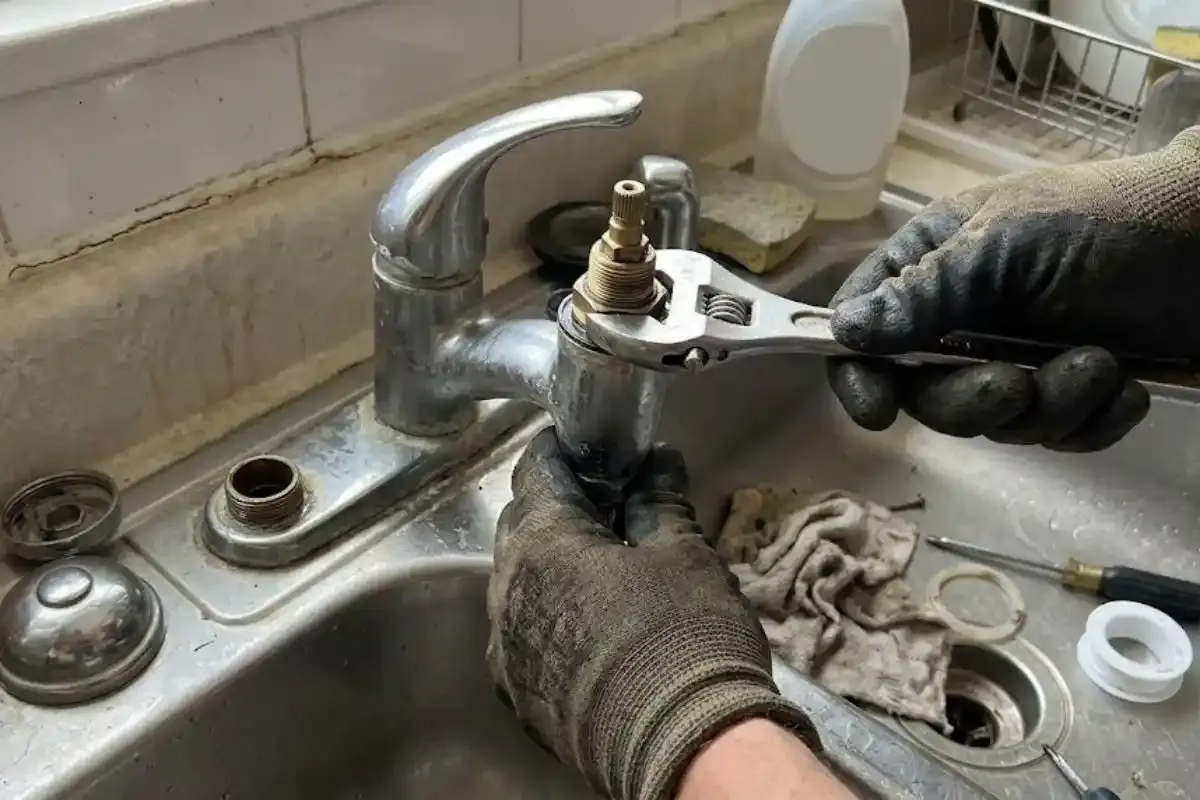
We shut off the water to the fixture, remove the handle and look at the cartridge, seat and O-rings. Compression faucets have a rubber washer on a stem. Cartridge and ball styles use a sealed insert that is replaced as a unit.
If the valve body itself is corroded or scored, a new cartridge will not seal. At that point we suggest replacing the faucet, and we explain why before touching anything else.
We then test every connection with the water on, including the supply lines and the stops, because a faucet job that leaves a weeping connection is not finished.
What changes the price of a faucet repair
Faucet work covers a quick cartridge swap through a wall valve repair. These factors drive the number.
A cartridge or washer is a part swap. A new faucet adds the fixture itself and the labor to set it.
A wall valve behind a tub or shower may need an access panel or an opened wall.
Common styles are simple to source. Designer or imported lines may need a part ordered from the maker.
If the stops under the sink are seized, we replace them first, and that adds a small repair to the job.
Same-day appointments when available differ from an after-hours emergency call.
A homeowners policy usually covers sudden accidental damage, such as a burst supply line that floods a floor. It usually does not cover worn parts or a slow drip. Check your own policy. We give a clear price before work starts, so call (206) 864-6558 for your number.
Fixtures that date back to the first postwar houses
Mountlake Terrace grew from a 1949 development that started with 250 small houses built on an assembly line, and later owners expanded or renovated many of them. Original or very old faucets, handles and shutoff valves can still be in service in houses of that age, and any fixture that old deserves a close look when it starts to leak.
In an older house we replace the stop valve and supply line while the faucet is apart, since an aging stop often fails the moment it is turned. Ask us to check what the house actually has. We never assume it from the year it was built.
What you can safely try, and what to avoid
A few quick checks are safe. Some moves turn a drip into a flood.
- Do turn the supply stop clockwise. Use your hand. If it will not move or starts to leak, stop and call.
- Do not force a stripped handle. You can break the stem and lose the ability to shut the water off.
- Do not wrap tape around a failing valve. Tape hides the problem and does not seal a worn stem.
- Do not leave the tub running while you wait. A tub that will not shut off belongs on the main shutoff until it is fixed.
Hose bibs, outdoor spigots and utility sinks
An outdoor spigot should be shut off at its interior valve before winter if there is one, and the hose should come off. A hose left attached can trap water in the spigot and split it. If a spigot drips inside the wall when the hose is on, close the supply and call.
Utility sinks in garages and laundry rooms follow the same rules as kitchen faucets. We can also replace a leaking valve behind a washing machine. If you are adding fixtures during a remodel, see plumbing installation.
When a faucet job turns into something bigger
If a bathroom faucet is fine but the toilet beside it runs, see toilet repair. If a kitchen sink drains slowly and the disposal hums, garbage disposal repair explains what we check.
Call (206) 864-6558 and we will route you. We also cover the next city south, as described on our Lynnwood page.
What people ask before they call about a faucet
Yes. Our line at (206) 864-6558 is open 24/7, and a supply valve that has burst or a faucet that cannot be shut off is an after-hours call we take. Smaller drips can go to a same-day appointment when available.
It depends on your lease. Most landlords and property managers handle plumbing repairs, so report the leak in writing and keep a copy.
If the owner wants a plumber to handle it, we can speak with the property manager about the work and the price. If a tenant caused the damage, the lease usually decides who bears the cost.
A drip from the spout usually means a worn cartridge, washer or seat, and it can be repaired if parts exist for that model. If the body is corroded, parts are no longer made, or the faucet leaks from several places, replacing it is the better choice. We say which is which before starting.
Usually the cartridge or the stem inside the wall valve is worn out. Replacing it often means opening an access panel or the wall. If the knob is stripped, it can be a handle problem only, and that is a simpler fix.
Yes. These angle stops and supply lines wear out and can seize, and they leak when you try to turn them. We can replace them as part of a faucet job, so the next repair does not end with a flood.
Shut the supply to that spigot if there is an interior valve, or close the main shutoff. Water behind a wall can soak framing and drywall without a visible puddle, so call before the damage spreads.
We can usually repair the plumbing behind them, such as cartridges, valves and supply connections, when parts can be sourced. Some designer lines need the maker's own part, and we tell you early if that will slow the repair.
Standards and sources
These public references sit behind the rules and checks this page mentions.