
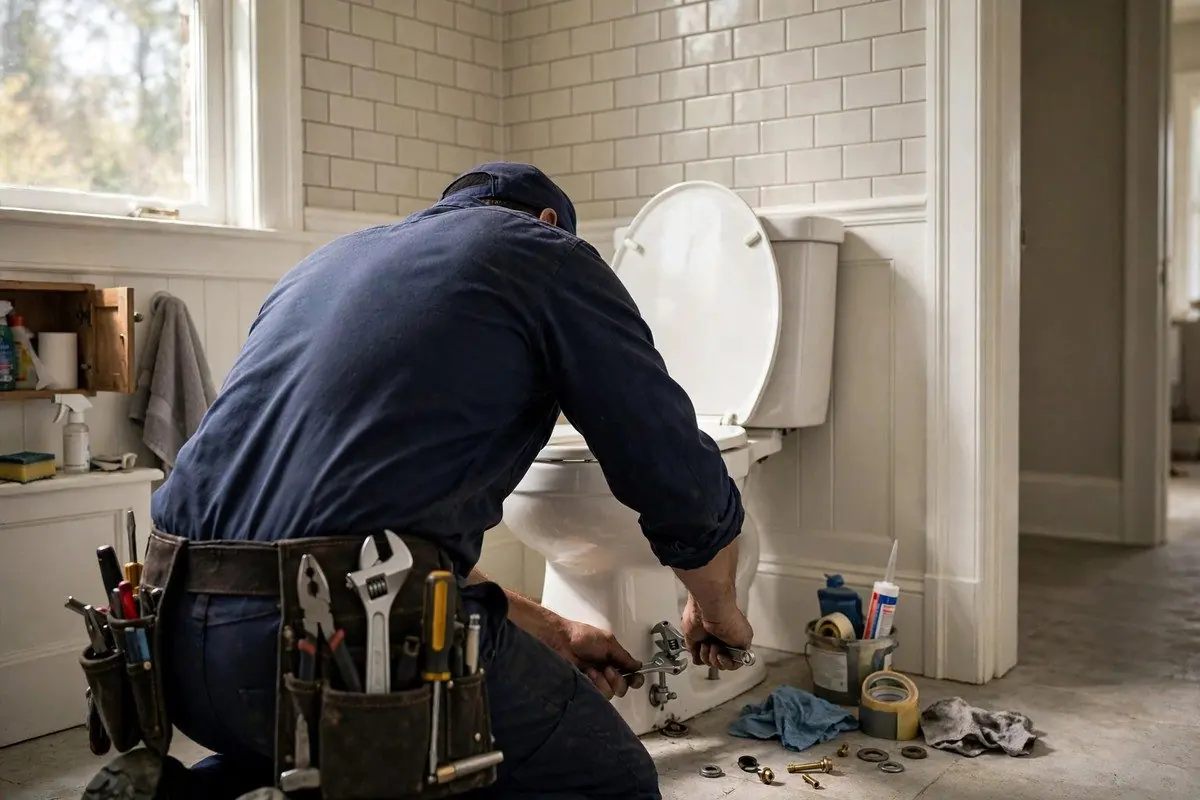
Water on the bathroom floor right now
If the toilet is overflowing or leaking onto the floor, we are on the line 24/7 and you do not have to wait for business hours. While you wait for a plumber, you can stop most of the damage yourself in a couple of minutes.
Water that reaches an outlet, a light fixture below or a ceiling stain in the room underneath is a bigger problem. Stay out of standing water near electrical items.
- Lift the tank lid and push the float up, or reach behind the toilet and turn the oval supply handle clockwise until it stops.
- Do not flush again. Bail bowl water into a bucket if it is close to the rim.
- Mop up what you can and put towels around the base to protect the subfloor.
- Check the room below for dripping, and flip the breaker only if the panel is dry and you can reach it safely.
- Call (206) 864-6558 and tell the dispatcher where the water is coming from.
What each toilet symptom usually means
Most calls come down to a handful of parts. This table matches what you see to the likely cause, so you know what to tell the dispatcher.
| What you see | Likely cause | What to do |
|---|---|---|
| Water pooling at the base | Failed wax ring or loose closet bolts | Shut the supply, stop flushing, call |
| Tank refills every few minutes | Worn flapper or flush valve seat | Shut the supply if it will not stop, call |
| Weak flush, handle feels loose | Chain too long or broken, or lever arm snapped | Safe to lift the lid and look, call if unsure |
| Hissing after the flush | Fill valve not shutting off | Close the supply valve, call |
| Drip at the wall valve | Worn stem packing or a bad supply line | Do not force the valve, call |
| Gurgling or bubbles in the bowl | Partial blockage or vent problem in the drain | Stop using nearby fixtures, call for a drain visit |
Call (206) 864-6558 and describe where the water is coming from, so the dispatcher can plan the right parts.
What happens inside the tank when the handle does nothing
A flush is a short chain of events. The handle lifts a chain, the chain lifts the flapper, and the tank empties into the bowl through a large opening. When the tank is empty, the flapper drops, and the fill valve refills it.
If the handle feels slack, the chain has probably slipped off the lever arm or broken. If the handle works but the flush is weak, the chain may be too long, or minerals may have narrowed the rim holes under the bowl lip.
How we trace a leak at the base
A toilet sits on a wax ring pressed between the bowl horn and the closet flange, the ring bolted to the floor. If that seal fails, wastewater leaks out at the base each time you flush, and it can soak the subfloor before you see a puddle.
We shut off the supply, empty the tank and bowl, and lift the toilet to inspect the flange. A cracked flange, rusted bolts or a flange set too low in the floor must be corrected, otherwise a new wax ring will fail again.
We then reset the toilet on a fresh seal, snug the bolts evenly so the porcelain does not crack, and test flush while watching the base.
What changes the price of a toilet repair
Toilet jobs range from a quick part swap to pulling the bowl and repairing the floor.
A flapper or fill valve is a small repair. A wax ring means removing the toilet and resetting it, which takes more time.
A damaged flange or soft floor adds repair work before the toilet can go back down.
Older tanks may not accept modern parts, and a cracked bowl or tank ends in replacement, which brings fixture choice into the price.
A seized or leaking supply valve needs to be replaced before other work can be done safely.
A homeowners policy usually covers sudden accidental damage, such as a supply line that bursts and floods the floor. It usually does not cover wear, corrosion or a slow leak at the wax ring. Check your own policy. We give a clear price before work starts, so call (206) 864-6558 for your number.
Safe to try first, and when to leave it alone
- Close the supply valve. Turn it clockwise by hand. If it will not turn or starts to drip at the stem, stop and call.
- Do not pour in drain chemicals. Acid and lye products can burn skin and damage the porcelain finish and seals.
- Do not keep flushing a rising bowl. More water just spills over the rim. Shut the supply and call.
Renters, landlords and who handles a toilet repair
About 41 percent of occupied homes in Mountlake Terrace are rented, according to the 2020 census, with a mix of apartments, condos and older single-family houses. In practice that means a large share of toilet problems start with a tenant and end with an owner or property manager.
Owners and managers can reach our dispatcher at (206) 864-6558, and we will go over the repair and the price with them directly. For service in the next city south, see our Lynnwood page.
Running toilets and the water bill
A toilet that runs can waste a lot of water without making any noise. Put a few drops of food coloring in the tank, wait without flushing, and check the bowl. If color appears, the flapper is leaking.
The city bills water every other month, so a hidden running toilet can go unnoticed for weeks. If the bill jumps and no toilet is running, a leak detection visit can find the leak elsewhere.
When the problem is the drain, not the toilet
If a bathtub fills when the toilet flushes, the blockage sits in the branch or main line. See drain cleaning for that, or faucet repair for the sink beside it.
Toilet repair questions, answered plainly
Yes. The line at (206) 864-6558 is staffed 24/7, and a toilet that is overflowing, cracked or leaking through the ceiling below is exactly the kind of call we take after hours. We offer same-day appointments when available for repairs that can wait until morning.
That depends on your lease and on what failed. In most rentals the landlord or property manager handles the plumbing, so tell them first and keep the message in writing.
If you or your manager want a plumber on site, we can talk with the property manager about the work and the price before anything starts. Never pay for a repair you expect the owner to cover without checking the lease.
Usually the flapper at the bottom of the tank is worn and lets water seep into the bowl. The fill valve then refills the tank in short bursts. A worn flapper is a small part, but the water loss adds up on your next utility bill.
Most leaks and flush problems come from parts that can be swapped, such as the flapper, fill valve, wax ring or supply line. A cracked bowl or tank cannot be repaired safely, so those toilets are replaced. We tell you which case you have before work starts.
Yes. A rocking toilet strains the wax seal and the flange under it, and the seal can leak into the subfloor without much visible water. Do not keep using a toilet that moves. Call so we can check the closet bolts and the flange.
We can work on the plumbing side, such as the supply line, shutoff valve and the connection to the wall. Electronic parts in a heated or washlet seat belong to the maker's service channel, and we will say so on the call if that is the likely fault.
Rarely. Gurgling usually points to a partial blockage or a venting problem further down the drain. That is a drain job, and we would look at the line rather than replace toilet parts.
Standards and sources
These public references sit behind the rules and checks this page mentions.