
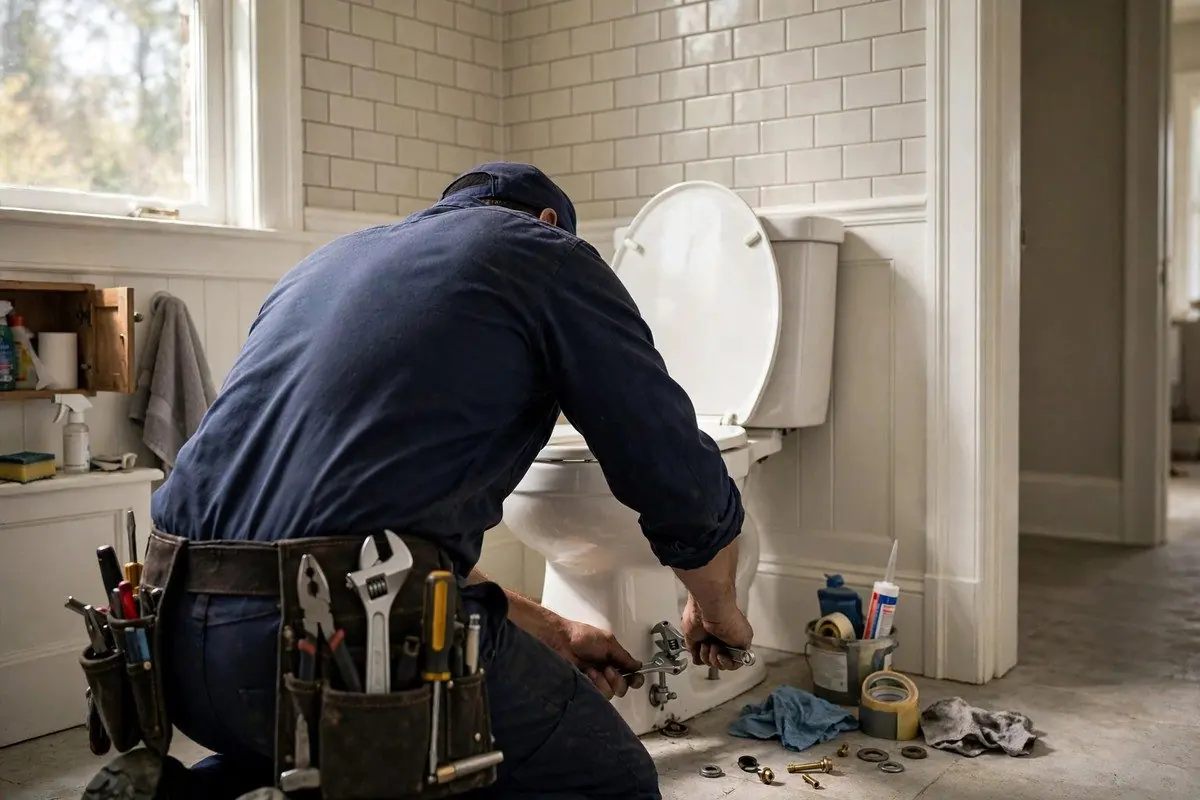
You probably do not need a new toilet
A toilet that runs, hisses, rocks or leaks at the base nearly always has one worn part. The porcelain lasts for decades, while the rubber and plastic inside it wear out in a few years.
That is the short answer. Replace the part that matches the symptom, and replace the toilet only if the bowl or tank is cracked. The table below pairs each common symptom with its likely part.
Symptom and part, side by side
| Symptom | Likely part | Homeowner job? |
|---|---|---|
| Tank refills every few minutes by itself | Flapper or flush valve seat | Yes, with the water shut off |
| Water runs into the overflow tube nonstop | Fill valve or float setting | Yes, a simple swap |
| Weak flush, handle feels loose | Chain length or handle arm | Yes |
| Puddle at the wall behind the toilet | Supply line or shutoff valve | Yes, if the stop works |
| Water or a sewer smell at the base | Wax ring or flange | Call a plumber |
| Water drips from the tank bolts | Tank bolt washers or gasket | Yes, with care |
[[tel|Call (206) 864-6558]] and describe the sound, the leak or the flush. We can usually name the part from the description.
The flapper and the fill valve
The flapper is the rubber seal at the bottom of the tank. When it ages, it stops sealing and lets a thin stream leak into the bowl, which tells the fill valve to top up the tank. That is the intermittent refill you hear at night.
The fill valve is the tall assembly that shuts off the incoming water when the float reaches the set level. When it wears or sticks, water keeps running into the overflow tube. Both parts are sold as universal kits, but match the flush valve size and the tank brand when you can.
Replace both at once if the toilet is more than a few years old. They wear together, and the second repair costs you another trip.
Swapping a flapper in four moves
This is a good first repair if you want to try one yourself.
Shut the water and drain the tank
Close the supply stop by the wall, flush, and hold the handle until the tank is mostly empty.
Unhook the old flapper
Lift the ears off the posts on the overflow tube and unclip the chain. Take it to the store so the new one matches.
Seat the new one
Set the ears on the posts and clip the chain with a bit of slack, so the flapper can drop fully closed.
Test with dye
Add food coloring to the tank and wait 15 minutes without flushing. Color in the bowl means the flapper still leaks.
What to have on hand before you start
A repair goes faster when the parts and the tools are on the floor before the water is off.
Buy a matched pair, or a kit that lists your flush valve size on the box.
Measure from the shutoff valve to the tank inlet and pick a length with a little slack.
There is always a cup of water left in the tank, and the supply line holds more.
Hand-tight plus a quarter turn is enough on plastic nuts. A wrench used hard cracks them.
A few drops in the tank before and after the repair shows if the flapper seals.
Supply line, shutoff valve and tank bolts
A braided supply line connects the shutoff valve to the fill valve. When it kinks, corrodes or loosens, you get a puddle behind the toilet or a damp wall. Replace the line, and hand-tighten the nuts before a final quarter turn with a wrench.
The shutoff valve, often called the supply stop, can also drip at the stem. If the stop will not close, you cannot do the other repairs safely. A stuck or leaking stop is a plumber job, so call (206) 864-6558 before forcing it.
The two bolts that hold the tank to the bowl have rubber washers that fail over time. A drip under the tank usually means one of them. Tighten evenly and gently, because porcelain cracks under too much force.
When the problem is under the toilet
The wax ring seals the toilet outlet to the flange in the floor. When it fails, water seeps out at the base, the floor under the toilet softens, or a sewer smell shows up in the bathroom. The flange itself can crack or sit too low.
That repair means lifting the toilet, replacing the seal, and checking the floor and the flange. If water has been leaking for a while, a leak check may be in order too. See leak detection for how we find hidden water.
When to stop and call
- Water at the base of the toilet. The wax seal may have failed.
- A soft or stained floor near the toilet. Water may be getting into the subfloor.
- A shutoff valve that will not close. Do not force it. Call us.
- A cracked tank or bowl. Shut the supply and call for a replacement plan.
- Wet outlets or lights near a leak. Do not touch them. Shut the breaker only if you can reach it dry and safely.
A note on flush strength and slow drains
A weak flush is not always a tank part. If water rises in the bowl and drains slowly, the trap or the branch drain behind it may be partly blocked, and a new flapper will not change that. Plunge with a flange plunger first, with the bowl at normal level.
If plunging fails, or other drains in the house gurgle at the same time, the blockage is further down the line. Stop flushing and call. Another flush can push water over the rim.
What this means in Mountlake Terrace
About 41 percent of occupied homes in the city are rented, from single-family rentals to the apartments and condos added in the 1970s. If you rent, a flapper or a fill valve is a small fix, but who does it comes down to your lease. Report the problem in writing so the repair is on record, and do not replace anything your lease reserves to the owner.
The City of Mountlake Terrace supplies the water and sends a bill every other month, so a toilet that runs unnoticed shows up as a bigger bill, not as a flood. A dye test every few months costs nothing and catches a silent leak before the next statement does.
Toilet part questions, answered
If the tank keeps refilling in short bursts with nobody using it, the flapper is leaking into the bowl. If water runs into the overflow tube or the tank will not stop filling, the fill valve is the likely cause. A drop of food coloring in the tank helps tell them apart.
It is possible, but it means lifting the toilet off the floor, and a toilet is heavy and awkward. If the flange is cracked or the floor under it is soft, the job grows quickly. Call us if you see water at the base or a damaged floor.
Chlorine tablets that sit in the tank can soften the flapper and other rubber parts. A flapper that is slimy, warped or sticky is often the result, so skip the drop-in tablets.
A rocking toilet is usually loose closet bolts or an uneven floor, but a rocking toilet can also break the wax seal. If you ever see water or smell sewer gas near the base, the seal has failed.
That depends on your lease, so read it first. Either way, tell your landlord or property manager about the leak or the constant running. We can talk with the property manager about what we found.
Yes. A flapper that leaks a thin stream all day adds up between bills. If your usage jumps without a reason, check every toilet with a dye test. We also cover plumbing calls in Lynnwood next door.
Standards and sources
These public references sit behind the rules and checks this page mentions.