
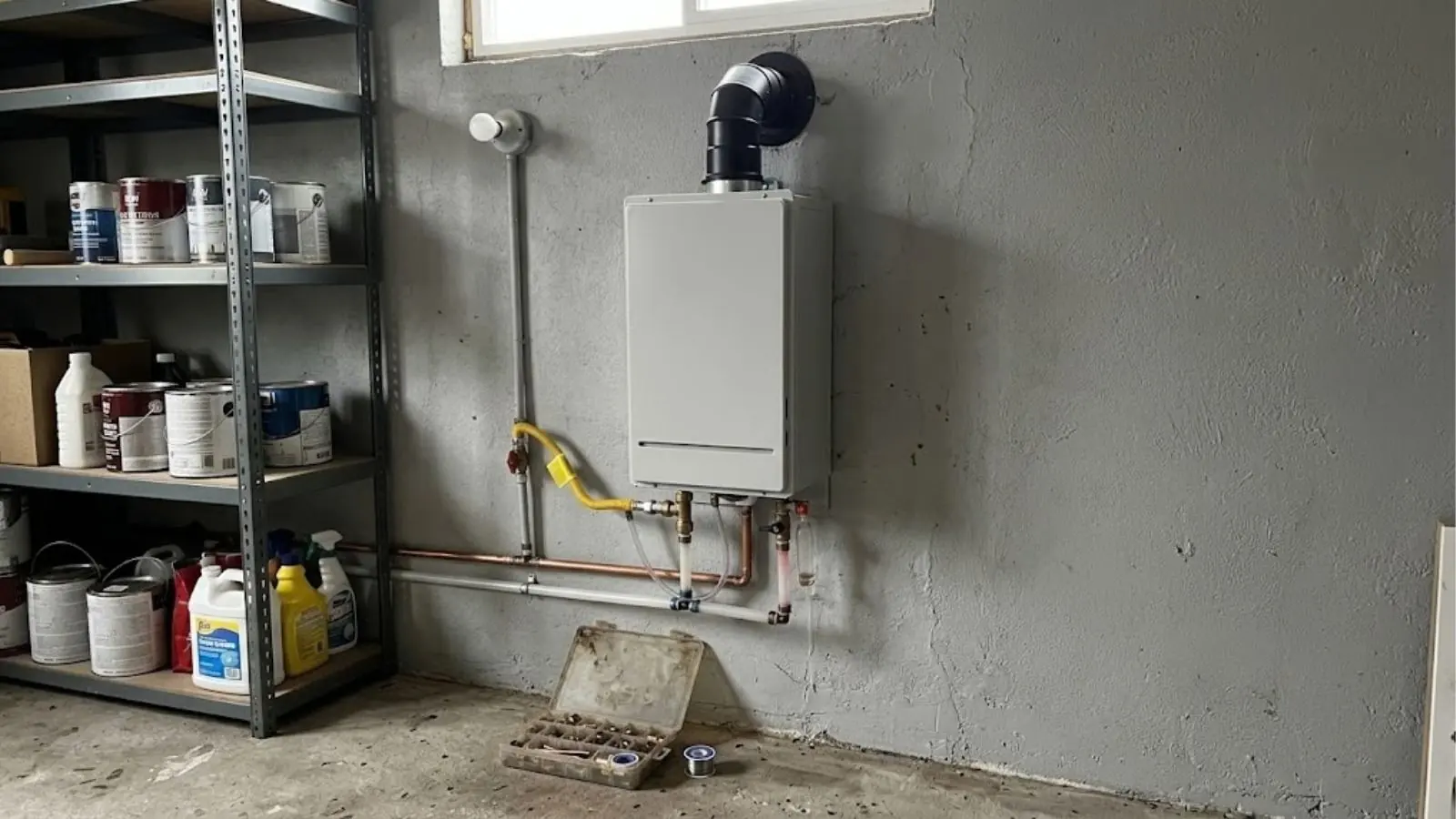
How a shower decides what size heater you need
A tankless heater has two limits. One is how much water per minute it can heat. The other is how many degrees it can raise that water. Your shower asks for a flow and a final temperature, and the heater must reach both.
On a mild day the incoming water is cooler than room temperature but not cold. In winter it is colder, so the heater has to add more heat to reach the same shower temperature. At the same setting, the unit hits its limit sooner.
So the short answer is yes for a single shower, if the heater is sized for your coldest months. Add a second shower, a laundry load or a dishwasher, and you have to count the flow of every fixture that can run together.
Gas and electric units, side by side
Both types heat water on demand. The differences are in what the house must supply.
| Question | Gas unit | Electric unit |
|---|---|---|
| What does it need from the house? | A gas line sized for the burner and a vent path | A dedicated electrical supply and a panel with room |
| How much water can it heat at once? | Usually more, which helps with two showers | Often less, so simultaneous use is tighter |
| How hard is a retrofit? | Venting and gas sizing can be the main work | Wiring and panel capacity can be the main work |
| What happens in a power outage? | Most still need electricity to run | Stops completely |
| Where does it fit best? | Homes with a gas supply and a vent route | Smaller loads, one bathroom, no gas line |
[[tel|Call (206) 864-6558]] and tell us how many people shower at once. We will explain what size fits.
Size it yourself in four steps
You can do this on paper before you call anyone.
List the fixtures that run together
Count the showers, sinks, dishwasher and washer that might run at the same time.
Find each flow rating
Check the shower head, the faucet aerators and the appliance labels.
Add them up
The total is the flow the heater must handle. Do not count fixtures that never overlap.
Plan for winter
Assume the coldest inlet water of the year, not the average. Ask the installer to size for that.
The minimum flow problem
Tankless units need a minimum flow before the burner or the elements turn on. A very gentle shower, or a faucet opened just a crack, may sit below that line. The heater never fires, and you get cold water from a tap you thought was hot.
This shows up most at a bathroom sink, where people run a trickle to wash hands. It also shows up with some ultra low-flow shower heads. Check the heater's minimum activation flow in its manual and compare it to the lowest flow you use.
Shower valves matter too. A pressure balancing or thermostatic valve in the wall keeps the temperature steady when someone flushes a toilet. An old valve can make a heater seem unstable when the valve is the part at fault.
What happens when two things run at once
If the demand is higher than the unit can heat, one of two things happens. The water comes out cooler, or the heater limits the flow to hold the temperature. Either way, the person in the shower feels it.
Low-flow shower heads, a small dishwasher cycle at a different time, and a laundry load delayed until after showers all help. These fixes cost only a change in habit.
If the household has several bathrooms and heavy use at the same hour, a second unit or a larger one may be the better plan. See water heater installation for how that decision is made.
What to have ready before a sizing visit
A short list of facts makes the visit faster and the recommendation clearer.
Say how many people shower in the same hour on a busy morning.
Note whether it is gas or electric and where it sits, and take a photo of the data label.
Read them off the heads, or tell us if you have a rain head or a body spray.
A dishwasher, a washing machine or a soaking tub changes the total load.
If hot water fades in cold months now, the heater will feel it more after the swap.
The cold water sandwich
Some people notice a burst of cold water between two short showers or in the middle of a long one. The heater shuts off, the water in the pipe cools, and the next draw has to wait for the heater to restart.
Short, frequent draws make this worse. It is normal behavior, and a recirculation setup or a heater with a small buffer can soften it.
When to stop and call
- A gas smell near the heater. Leave the building, call the gas utility or 911, then call us.
- Water that goes scalding or ice cold without warning. A sensor or a mixing valve may have failed.
- An error code that returns after a reset. Stop resetting it and call (206) 864-6558.
- Water dripping from the unit or the vent. Shut off the supply to the heater and call.
- A tripped breaker every time the heater starts. Do not keep resetting it. Panel work is for a licensed electrician.
Should you wait for a failure or plan ahead
If your current tank still works, you have time to pick the heater, price the gas or electrical work, and choose the controls. A heater that dies on a cold weekend gets replaced in a hurry, with fewer choices.
A heater that leaks or has rust at the tank base cannot wait. Shut off the cold supply to it and call. See our tankless water heater page for what the switch involves, and call (206) 864-6558 if you would like to talk through the sizing first.
What this means in Mountlake Terrace
Puget Sound winters bring colder water to the heater's inlet. A tankless unit has to raise that water further, so output drops in winter. A heater that fills a shower well in September may feel tight in January. Size the unit for the cold months, not the mild ones, so winter showers do not turn lukewarm.
Washington adopts the 2021 Uniform Plumbing Code with state amendments. For you, that means the gas piping, the venting and the connections have to meet code, and the installer should size them to the unit. Ask how the vent route and the gas line will be sized before you sign off on a heater.
Tankless shower questions, answered
Look for a rating stamped on the shower head or printed on the box. If it is gone, run the shower into a bucket for a measured time and compare. That number is the one to add up across fixtures.
The heater is at its limit. Once total demand passes what the unit can heat, the water coming out gets cooler, or the unit cuts back flow. A larger unit or a second heater can solve that.
Gas units usually heat more water at once, but they need venting and a gas line sized for the burner. Electric units are simpler to install but draw a lot of power, so the electrical panel has to support them.
Sometimes. It depends on the flow of each shower and the temperature rise the heater has to deliver. Low-flow shower heads stretch a unit further than a rain head does.
Yes. Venting, clearances and gas connections follow the Uniform Plumbing Code that Washington adopts, so the installer picks a location that meets it. A closet or a garage wall that looks convenient may not work.
Only a little. Pipe length, shower heads, gas supply and the number of bathrooms all differ. We also serve plumbing calls in Lynnwood, and the sizing questions are the same there.
Standards and sources
These public references sit behind the rules and checks this page mentions.