
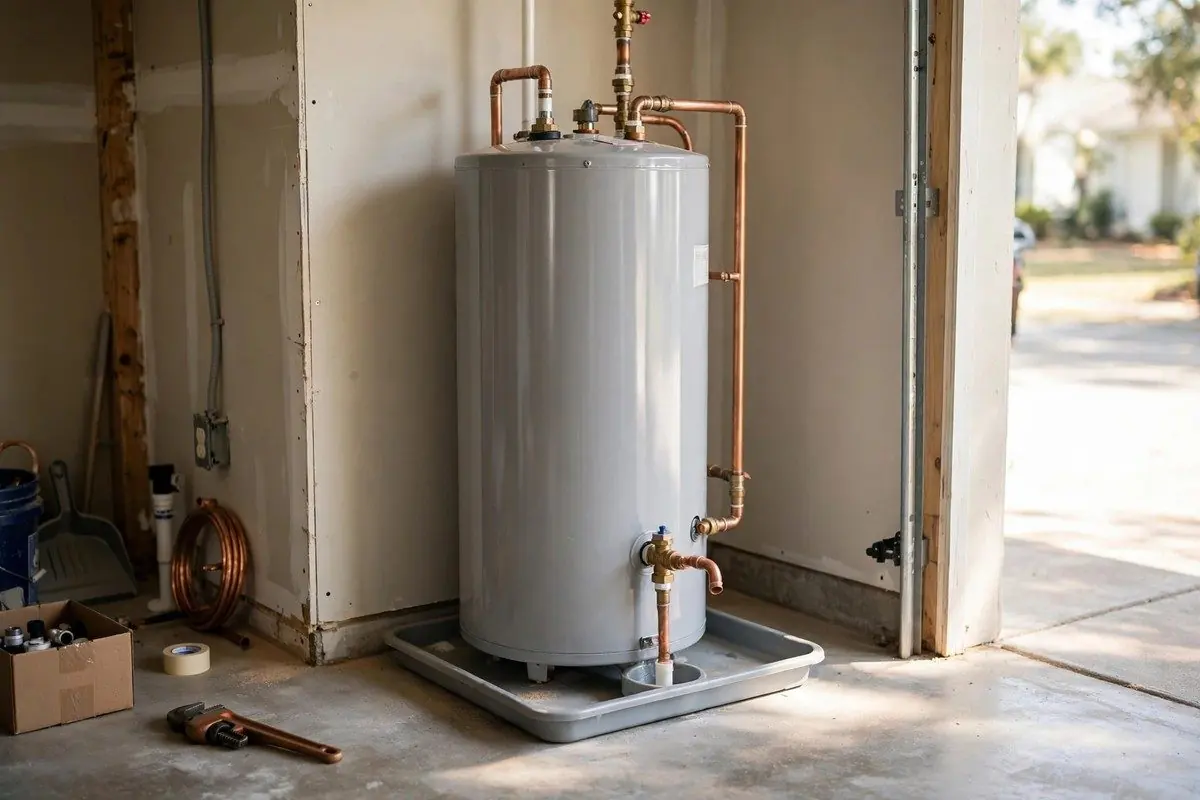
A water heater is not a swap of two hoses
People are sometimes surprised by how much surrounds a water heater. The tank sits between five connections: cold supply, hot outlet, fuel or power, exhaust, and the relief valve discharge. A mistake at any of them can mean scalding, leaks, carbon monoxide or a flooded closet.
Our job is to make each connection correct and to make sure the new unit suits the space. We also run a 24/7 line, so if something looks wrong after the install, a dispatcher picks up.
What a proper installation includes
These are the connections and parts we set up on a new tank.
- Shutoff valve. A full-port valve on the cold supply so the tank can be isolated for service.
- Flexible or rigid connectors. Dielectric fittings where dissimilar metals meet, to slow corrosion.
- T&P valve and discharge pipe. Piped to a safe termination, never capped or reduced.
- Expansion tank. Added when the system is closed and the tank needs it.
- Venting or electrical. Flue and draft hood, power-vent pipe or a correctly sized circuit.
- Drain pan. Recommended where a leak would damage floors, finishes or rooms below.
- Strapping. Wall straps or a seismic kit hold the tank upright.
Give the dispatcher the fuel type, the location and the unit you have in mind. Call (206) 864-6558.
How the exhaust leaves the building
Venting is where most installation questions begin. This table compares the common routes.
| Venting type | How it works | When it fits |
|---|---|---|
| Atmospheric flue | Hot gases rise through a metal flue to a chimney or roof | Replacing an old gas tank where the flue is sound |
| Power vent | A blower pushes exhaust through plastic pipe to an outside wall | Moving a vent off a chimney or when a flue is not practical |
| Direct vent | Draws air in and sends exhaust out through two pipes | Sealed spaces where room air is limited |
| Electric | No exhaust at all | Spaces with no vent route and a strong circuit |
| Heat pump | No exhaust, but needs airflow and a condensate drain | Open areas with room and a drain nearby |
From a site look to a working tank
Every install runs through the same checks, whatever the brand.
Check the site
We look at the location, the venting route, the gas or electric supply and the drain.
Confirm the unit
We match the tank to your fuel, capacity and space, or check the one you bought.
Set and connect
Shutoffs, connectors, relief piping and fuel or power go on.
Vent and test
We check draft or exhaust, pressure, leaks and temperature before the work is done.
Flooded closets and damaged pans
Sometimes an install comes after water damage. A tank that flooded a basement or garage may have left a rusted pan, a rotted shelf or damp drywall behind it. We look at the base, the floor and the walls before setting new equipment.
If you are dealing with active water right now, close the cold supply valve above the tank and see water heater repair or replacement for the emergency path.
What drives the cost of a water heater installation
Installation price depends on the site more than on the tank. These factors apply.
Standard tank, power-vent, direct-vent and heat pump each need different parts and labor.
Moving from a chimney to a side wall means new pipe, new clearances and a wall penetration.
Gas to electric or heat pump brings circuit work, capping the gas and sometimes a condensate drain.
Corroded connectors, old shutoffs and aged piping near the tank often need replacing at the same time.
Who buys the unit changes the scope, and the warranty on the unit stays between you and its maker.
Homeowners policies usually cover sudden accidental damage, not wear or gradual leaks. Check your own policy. We give a clear price before work starts, so call (206) 864-6558 for your number.
Code and permit questions in Washington
Washington adopts the 2021 edition of the Uniform Plumbing Code, published by IAPMO, with state amendments. That is the framework behind questions on relief valves, discharge piping and pressure. It does not tell you everything about your house, so we do not guess about specific sections.
For a permit question, call the City of Mountlake Terrace permit center before the work starts. The city lists plumbing, mechanical and electrical permit types, and permit rules vary with the scope of the job. You can also check any contractor you plan to hire on the state L&I Verify tool, which shows registration status and violations.
Safety around gas and electric connections
If you smell gas near a gas heater, leave the building and call the gas utility or 911 first, then call us. We do not service gas lines, and no pilot should be relit when there is a smell.
On electric units, never open a live panel to work on the circuit yourself. If a breaker trips again and again, leave it off and call. For other jobs near the heater, see our plumbing installation page.
Before you install: common questions
Ask when you call. We check the model, fuel type and your site before agreeing, and we give a clear price before work starts. Some buyers choose a unit that does not suit their venting or electrical, so describe what you bought.
Permit rules vary, so ask the city permit center before the work starts. The city lists plumbing, mechanical and electrical permit types, and the permit center can tell you which applies to your project.
Often, with the right unit. A power-vent or direct-vent model sends exhaust through a plastic pipe to an outside wall instead of a chimney. We look at the route, the clearance to openings and the combustion air before we confirm it.
A heat pump unit needs an electrical circuit, room and airflow around it, and a condensate drain. The gas supply to the old unit also has to be properly capped. We check each item on site first.
Talk to your landlord or property manager first, since the heater is part of the building. If they approve, we can speak with the manager and give them a clear price before any work starts.
The T&P valve opens when the tank gets too hot or the pressure climbs too high. The discharge pipe carries that hot water safely down toward the floor instead of onto you. It should not be capped, reduced or run uphill.
On a closed plumbing system, with a check valve or pressure reducing valve on the supply, yes, heated water has nowhere to expand without one. We look at your supply setup and tell you whether one belongs on your install.
Standards and sources
These public references sit behind the rules and checks this page mentions.