
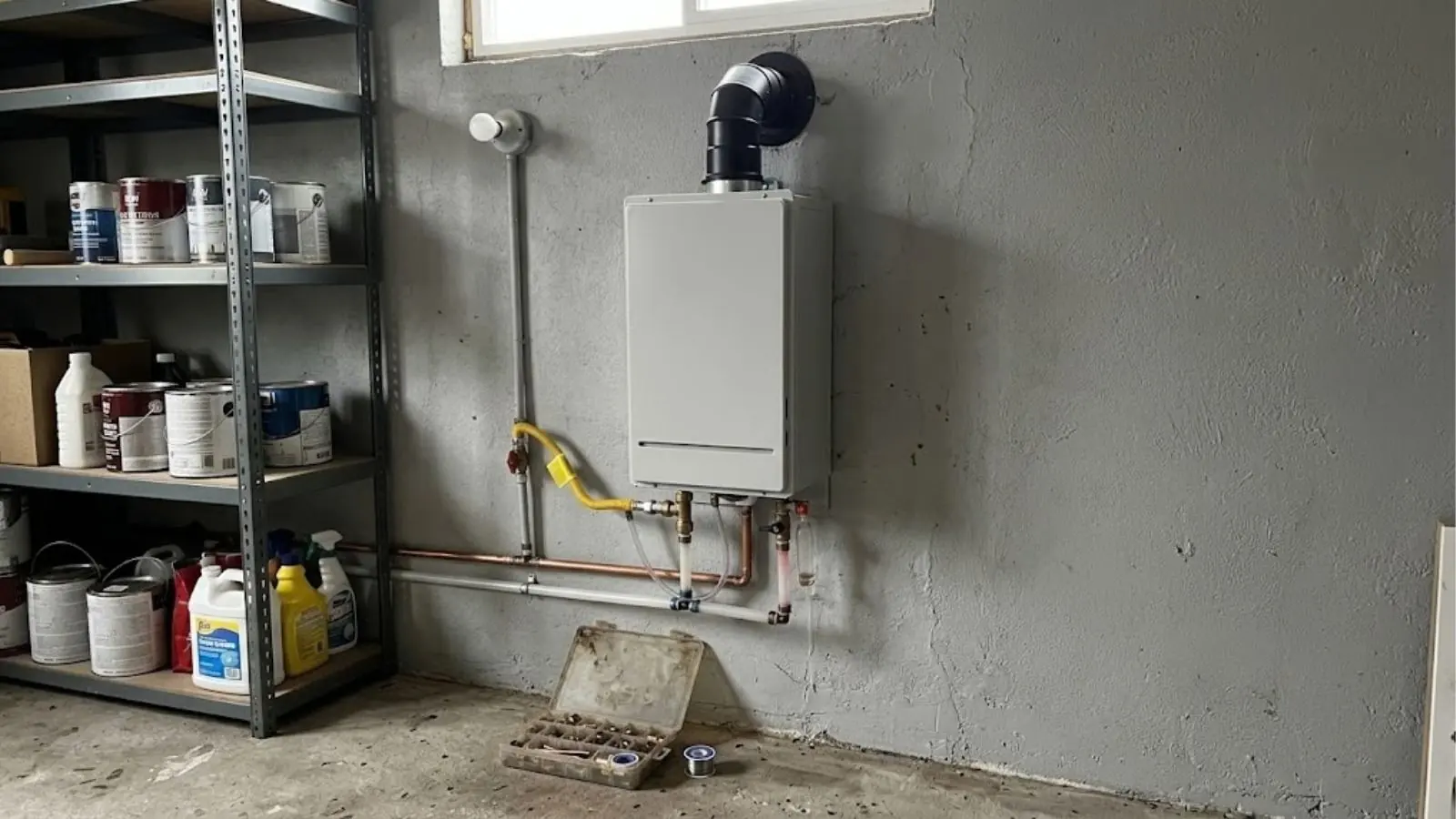
Start with the wait, not the pump
A tankless heater makes hot water fast, but it cannot shorten the trip between the heater and your tap. Hot water has to push the cooled water out of the pipe first, and the longer and wider that pipe is, the longer you wait.
A recirculation pump keeps warm water moving, either through a dedicated return line or by using the cold line as the return. Do you need one? If your wait is short, probably not. If a far bathroom or kitchen makes you run the tap for a long time, it can be worth it.
Signs a pump would help
You are a good candidate when most of these fit.
- The wait is long at one or two fixtures. The rest of the house gets hot water reasonably fast.
- The heater sits far from those fixtures. A bathroom addition or a second story is a typical case.
- You use hot water in predictable bursts. Morning showers and evening dishes fit a timer well.
- You hate running water down the drain. A pump brings hot water to the fixture without waiting at the tap.
- Your heater can take a pump. Some models have a port or a built-in recirculation mode.
[[tel|Call (206) 864-6558]] and tell us where the heater is and where the wait is longest.
What happens inside the loop
With a dedicated return line, the pump sits at the heater and pulls cooled water back through a second pipe, so warm water is always travelling past the branch to each fixture. When you open a tap, the hot water you need is already a short way off.
A crossover system works differently. A small pump under the farthest sink pushes hot water into the cold line until a sensor says the line is warm, then shuts off. The cold side acts as the return, which is why it needs no new pipe but leaves the cold tap lukewarm for a while.
Either way, the heater has to accept the flow. Some units want a pump wired to the heater's own controls, and some want a separate circuit. A technician reads the model before choosing the parts.
Three ways to move the water
Each approach trades wait time for cost, noise and energy use.
| Type | How it works | Good fit | Watch out for |
|---|---|---|---|
| Dedicated return line | A pump pushes water through a separate return pipe back to the heater | New builds and remodels with open walls | Needs a new pipe run to the heater |
| Crossover valve under a sink | A small pump and valve use the cold line as the return | Existing homes without a return line | Cold tap runs warm for a while |
| Built-in buffer tank | The heater holds a small reserve and cycles water through it | Heaters that offer it | Limited to what the model supports |
| Pump with a controller | Timer, push button or temperature sensor turns the pump on | Any of the above to trim energy use | Wrong settings leave it running all day |
Noise, heat loss and other trade-offs
Pumps hum, and a crossover valve can click or buzz in a cabinet. Mounting the pump on rubber isolators and keeping it off hollow framing helps. A pump that rattles is usually bolted tight to something that amplifies it.
Warm water sitting in a long pipe loses heat. A pump that runs all day makes the heater fire to replace that heat, which costs gas or power for no benefit at 3 a.m. A timer or a button keeps the benefit and trims the waste.
Water hammer can also follow a poor install, such as a pump without a check valve. A good installer sets the flow direction, places the check valve, and tests the loop before leaving.
How to decide, in four steps
You can do the first three before anyone comes to the house.
Time the wait
Run the farthest tap and count how long it takes for warm water to arrive. Do the same at the nearest fixture.
Check the heater's manual
Look for a recirculation port, a built-in mode, or a statement about adding a pump. If the manual is gone, the model number on the unit is enough.
Pick a control style
A push button is cheap to run, a timer covers routines, and a temperature sensor keeps the loop warm when it cools.
Call for a layout check
A technician traces the pipe, spots a return path, and tells you if a pump will help. See water heater installation for how we plan a loop.
A pump cannot fix a heater that is too small
If hot water fades during a shower, that is a flow and capacity question, not a wait question. A pump moves hot water around, but it does not make more of it.
That is a different conversation, and it starts with how many fixtures run at the same time.
When to stop and call
- A gas smell near the heater. Leave the building and call the gas utility or 911, then call us.
- Water dripping from the pump or the valve. Shut the supply to that branch and call.
- A heater that shows an error code after you change settings. Do not keep resetting it, call us.
- Scalding water at the fixtures. A mixing valve or a heater setting may be wrong.
What to ask before anyone drills a hole
Ask where the pump will sit, how it will be supported, and where the check valve goes. Ask what controls it, and if you can change the schedule yourself.
Ask how the install handles the pipe supports, because a pump and a return line add weight and a little vibration to fittings that were built only to carry water. A clear answer here tells you whether the installer has planned the job or is guessing.
Finally, ask about the price in plain terms. We give a clear price before work starts, and you can call (206) 864-6558 to describe your layout and hear what the work would involve.
What this means in Mountlake Terrace
Many of the compact postwar houses here were built with the water heater close to the bathroom and kitchen, which often means short runs. In those homes a pump may add noise and a part to maintain without much gain. Larger additions that put a bathroom at the far end of the house are the ones where a long wait shows up, and the pump decision is worth a closer look.
This is earthquake country, so a wall-mounted tankless unit should sit on solid framing and any pump and return line should be supported rather than hanging from soldered joints. Ask for the mounting and the pipe supports to be part of the plan, because a pump adds weight and vibration to fittings that were not built to carry them.
Recirculation pump questions, answered
Not truly instant. The pump moves warm water through the loop so it is closer to the fixture when you open it. The wait gets shorter, but it depends on the loop, the controls, and how recently the pump ran.
It can. Warm water in the pipes loses heat, and the heater has to fire to replace it. A timer, a push button or a temperature control keeps the pump from running all day and limits that loss.
Often yes. Many tankless units accept a pump or have a recirculation port, and a crossover valve can be added under the farthest sink. Which option fits depends on the heater model and on whether a return line exists.
That is how a crossover system works. It uses the cold line as the return path, so the cold line warms for a while. It is normal, though some people dislike it at the kitchen sink.
It can reduce it. The cold slug appears when the heater stops and restarts between short uses, and a pump keeps warm water moving so the gap between draws is smaller.
It might not need one. Compact homes often have short pipe runs, while larger additions can mean longer ones. A technician can trace the run from the heater to your farthest fixture and tell you if a pump is worth it. We dispatch next door too, so a plumber in Lynnwood gets the same layout check.
Standards and sources
These public references sit behind the rules and checks this page mentions.