
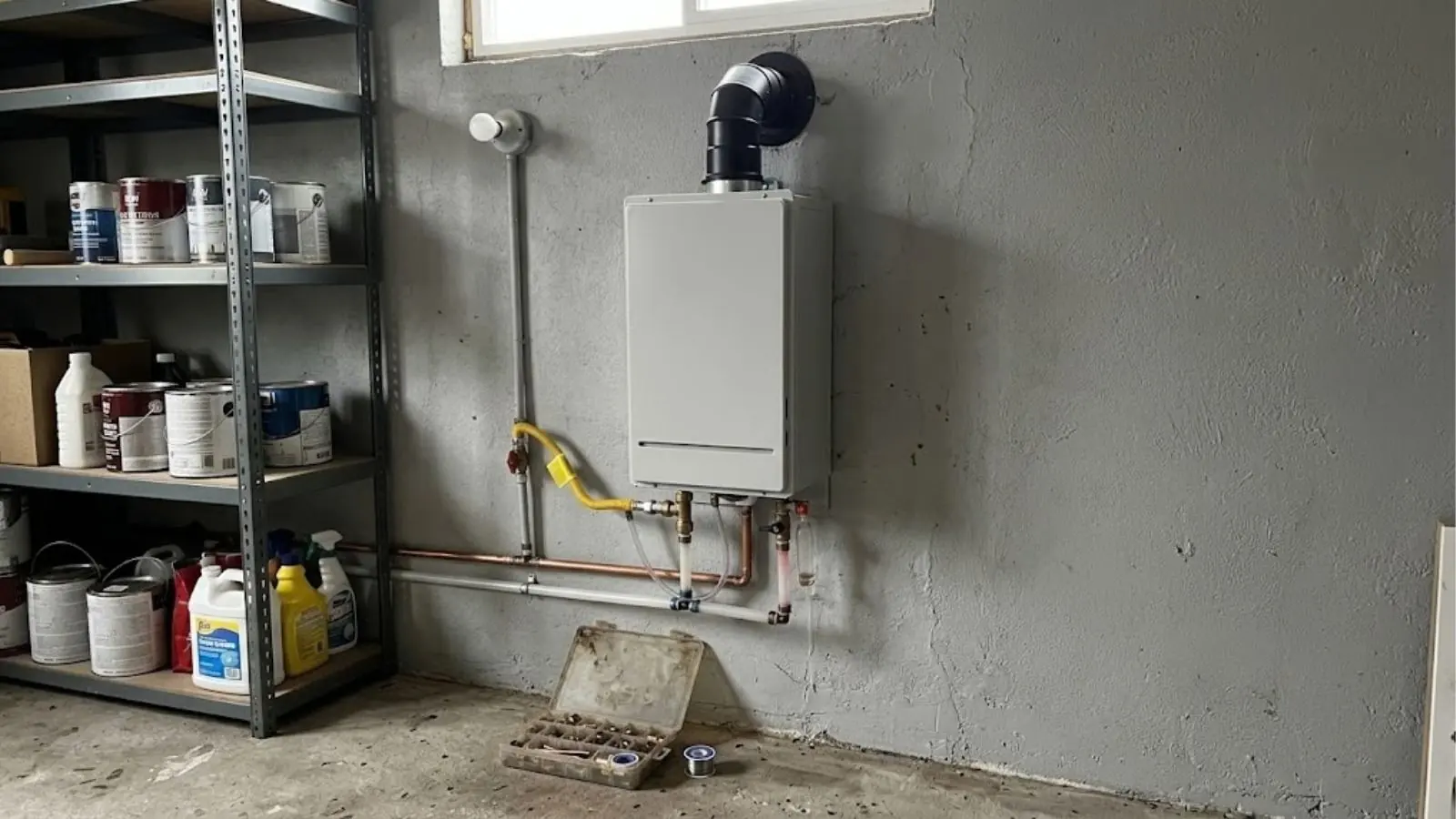
The unit is only the starting line
A gas tankless heater heats water as it flows, so it needs a lot of gas at once, a clean vent path and a way to drain acidic condensate. A tank heater being replaced often has none of that set up. The old tank sat on a small gas line and vented through a draft hood and a simple flue.
That gap is why no honest installer can name a total before seeing the space. We give a clear price before work starts, and we need to see the existing heater, gas meter and wall to do it. Call (206) 864-6558 and describe what you have.
Five factors and what each one changes
Each row is a decision that moves the scope of the job.
| Factor | What it involves | Why it moves the job |
|---|---|---|
| Gas line sizing | Line length, fittings, meter capacity | A small line cannot feed the unit at full fire |
| Venting | Material, length, wall or roof exit | Longer or more bends mean more parts and labor |
| Condensate | Drain path, neutralizer, trap | No nearby drain means a pump or longer run |
| Electrical | Outlet near the unit, surge protection | The controls and fan need power |
| Relocation | New spot for the unit | New gas, water, vent and power runs |
Call (206) 864-6558 so the dispatcher can ask the right questions about your gas line, vent path and location.
Gas line sizing, the factor that surprises people
A tankless heater can use several times the gas of a tank at peak demand. The pipe from the meter has to carry that load along with your furnace, range and dryer without a pressure drop. If the line is too small, the burner starves and the unit errors out or heats unevenly.
A plumber checks the run length, pipe size and number of fittings. Sometimes a short extension solves it, and sometimes a section needs to be replaced. If the gas meter itself is too small, that is a conversation with your gas utility, not something we can resolve for you.
Venting and where the exhaust goes
Exhaust has to leave the building safely. Condensing tankless models use plastic vent pipe that runs sideways through a wall, while older tank flues rise through a chimney or roof. Those are different systems, so the old vent often cannot be reused.
Vent length, the number of elbows, and clearance to windows and meters all count. A cramped utility closet or a finished basement makes the route harder. Ask your installer to show you on paper where the pipe will run and where it will exit.
What to have ready before a quote visit
These details speed up an accurate scope.
Fuel, age and a clear view of the data plate.
Where they sit and whether they are reachable.
The wall or closet where you want the new unit.
Floor drain, laundry standpipe or sink.
The closest working receptacle.
How many baths and appliances run at once.
Condensate, electrical and the small parts that add up
A condensing unit makes a steady drip of condensate. It has to reach a drain through a trap, and many installers add a neutralizer cartridge so the acidic water does not eat a cast iron line. The drain location can drive the unit's position, so decide that early.
A tankless unit still needs a standard outlet for its fan and controls, even though it burns gas. If no outlet is nearby, an electrician may need to add one. Add an isolation valve kit for service, a pressure relief valve and a discharge line, and those pieces show up on any complete quote.
Size, flow and why the model matters
Unit size is a cost factor too, though it is not the loudest one. A larger unit costs more to buy and may need a bigger gas line and vent. A smaller unit may not keep up when two showers and a dishwasher run together. Count your fixtures and the busiest hour of your day before you pick a size.
Inlet water temperature also plays a part. Colder water in the winter means the burner works harder to reach the same set temperature, so a unit that feels fine in summer can struggle in January. Ask the installer to size for the cold months, not the warm ones.
Relocation changes everything
Moving a heater to a new wall feels like a small request. It means new gas, water, vent and power routing, sometimes through finished walls. If the goal is to gain floor space, a wall-mounted unit in the old footprint can be cheaper than a move across the house.
How to compare gas tankless quotes fairly
Use the same checklist on every quote.
Ask for scope in writing
List gas line, vent, condensate, electrical and permit as separate items.
Check what is excluded
Look for a line that says 'by others' or 'if needed'.
Verify the contractor
Use Washington L&I Verify before you pay a deposit.
Ask who handles the permit
Confirm it is part of the price, not left to you.
When to stop and call
If you smell gas at any time, leave the building and call your gas utility or 911 from outside before calling us. We cannot service gas lines. For installation work on a unit you chose, see our water heater installation service and the options on the tankless water heater page. Our team also serves Lynnwood next door, and the dispatcher can talk through your setup at (206) 864-6558.
What this means in Mountlake Terrace
Washington adopts the 2021 edition of the Uniform Plumbing Code, published by IAPMO, with state amendments. For you that means the vent, relief valve, gas connection and condensate drain on a new unit are expected to follow a written standard. Ask any installer which standard they build to, and expect them to explain it plainly.
The Mountlake Terrace permit center at City Hall lists Building, Electrical, Mechanical, Plumbing and Fire permit types, and it publishes plumbing application checklists. The city page does not say when a water heater permit is required, so permit rules vary. Ask before the work starts, and add the permit to the written quote so it is not a surprise later.
Tankless install cost questions
Usually the scope differs, not the unit. One quote may include a new gas line, a condensate neutralizer and a permit, while the other leaves them out. Ask each contractor to list every task so you compare equal jobs.
Often yes. A tankless unit pulls much more gas at once than a tank heater, so the existing line, meter capacity and fittings must carry it. A plumber sizes the line to the unit's input rating and the total gas load of the home.
High-efficiency tankless units pull so much heat from exhaust that the gas turns to slightly acidic water. That water has to drain to a safe spot, often through a neutralizer. A floor drain or a laundry standpipe nearby can simplify this.
Not always. Many tankless models need a specific vent material and routing, and an old flue sized for a tank heater may not fit. Some units vent through a side wall, which changes the work and what the permit covers.
Yes. Relocating the heater means new gas, water, vent and power routing, and sometimes patching walls. Replacing in the same spot is usually the simplest, and a wall-mounted unit in the old tank's footprint opens up floor space.
Permit rules vary, so ask the city permit center before the work starts. Gas, venting and electrical changes are the kind of work the city lists permits for, so confirm what applies to your job and who will pull it.
Standards and sources
These public references sit behind the rules and checks this page mentions.