
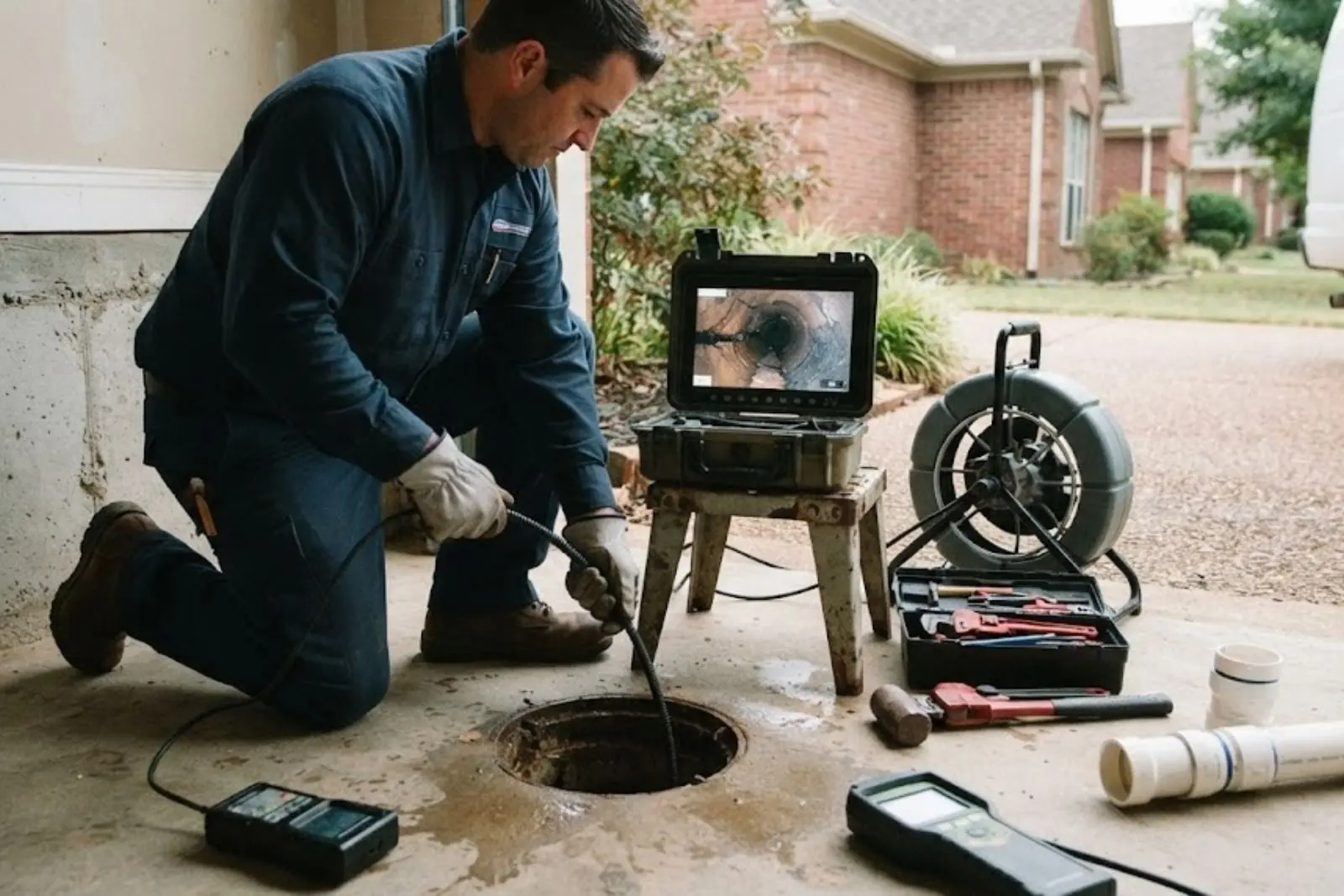
What a sewer camera sees inside the pipe
A sewer camera is a small lens on a flexible cable, pushed into the line through a cleanout or other access point. A light on the head shows the pipe wall, and the picture comes back to a screen so you and the technician can look at it together.
That view settles questions a cable cannot. A cable tells you something was in the way. A camera shows whether it was grease, roots, a cracked joint or a sagging section. Our line takes calls 24/7 if you want to talk through what you are seeing at home.
Reasons people ask for a camera look
Most inspections start with a question that a quick fix cannot answer.
- A repeat clog. Find out whether roots or a sag are behind it.
- A clog before paying for a repair. Confirm that the pipe is actually broken.
- A house under contract. See the lateral before closing.
- A remodel or build-out. Learn where the sewer line runs before cutting into a slab or yard.
- A sewer smell or a trap that will not hold water. Check for vent and line problems.
- A suspected leak in the sewer line. Confirm it with a look instead of digging.
Call (206) 864-6558 and tell us why you want the inspection. We give a clear price before work starts.
What the picture shows and what it means
Each image points to a different next step.
| On the screen | What it means | Likely next step |
|---|---|---|
| Fine white threads or a mass in the pipe | Roots have entered at a joint or crack | Cutting or jetting, and a plan for the joint |
| A thick coat of grease or scale | Buildup narrowing the pipe | Jetting and better habits |
| Water pooled in a low stretch | A belly where the pipe has settled | Monitor, clean on a schedule or repair |
| A crack, gap or offset joint | Damaged pipe | Spot repair or replacement |
| Clear, flowing pipe with no defects | The blockage was local | Clear the single fixture and move on |
Verify any plumber, and what renters and buyers should know
Washington L&I runs a Verify tool at secure.lni.wa.gov/verify. It lets anyone check a contractor's registration and license, plumbing certification status, workers' comp coverage and any safety citations or lawsuits against a bond. Search by business name, owner name, UBI or license number. Do this with any plumber before work starts, a good habit for a sewer job.
Mountlake Terrace has 9,202 housing units, and about 41 percent of occupied homes are rented. If you are a tenant, report slow drains or odors to the owner in writing, since the sewer line is usually theirs. If you are a buyer, a camera look before closing can show problems the walk-through cannot.
How an inspection visit goes
The visit is short and straightforward, with a focus on what you need to know.
Find access
We locate the cleanout or another entry point. If the line is plugged, we may need to clear it first.
Run the camera
The camera moves through the line, and we stop where something shows up.
Mark and explain
We point out roots, cracks or sags and note where they sit along the run.
Talk through next steps
If cleaning or repair is needed, we explain the options and give a clear price before work starts.
What affects the price of a sewer inspection
The visit varies with the line and the access.
A clear cleanout is easy. Without one, we may have to remove a toilet or find another way in.
A longer lateral means more cable and more time.
A fully blocked pipe has to be opened before the camera can pass.
Buyers or inspectors may want notes on what was seen.
We give a clear price before work starts, so call (206) 864-6558 for your number. Insurance usually does not pay for an inspection of a worn line, though some policies help once a sudden failure causes damage. Check your own policy.
What to have ready before the camera goes in
A little preparation helps the visit go smoothly.
Clear access so we can reach it quickly.
Slow drains, smells, backups and how long they have happened.
If you are buying, share the contract timeline.
Tell us about earlier cabling, repairs or camera reports.
Inspecting versus locating
An inspection looks at the condition of the pipe. A locate finds where it runs, which matters when a remodel or an addition would cut near the line. A camera head can carry a small transmitter that a receiver above ground picks up, and that shows both position and depth. Tell the dispatcher if location is part of your project.
If the camera shows a blockage, read about sewer line cleaning. If it shows buildup on the walls, hydro jetting may follow. We also work in Lynnwood.
Camera inspection questions
No. The camera shows what is in the pipe but does not remove it. If a blockage is found, clearing is a separate step, usually with a cable or jetting. Seeing the clog first helps pick the right tool.
As early as your contract allows. Findings like roots or a belly can be raised with the seller while there is still time to negotiate. Tell the dispatcher your inspection deadline, and we offer same-day appointments when available.
Tell your landlord or property manager first, since the sewer line is usually the owner's pipe and the lease decides who pays. If a manager asks us to inspect, we can talk with them directly and explain what we find.
Use the Washington L&I Verify tool online and search by business name, owner name or license number. Do this with any plumber you hire, including us, before work starts.
Not always. A P-trap that has dried out is the most common cause, and running water in the drain for a minute may fix it. If the smell comes back, a camera look can show whether a vent, crack or partial blockage is behind it.
Access to the line, how long the run is and whether the line needs clearing first. We give a clear price before work starts, so call (206) 864-6558 and describe your situation.
Standards and sources
These public references sit behind the rules and checks this page mentions.