
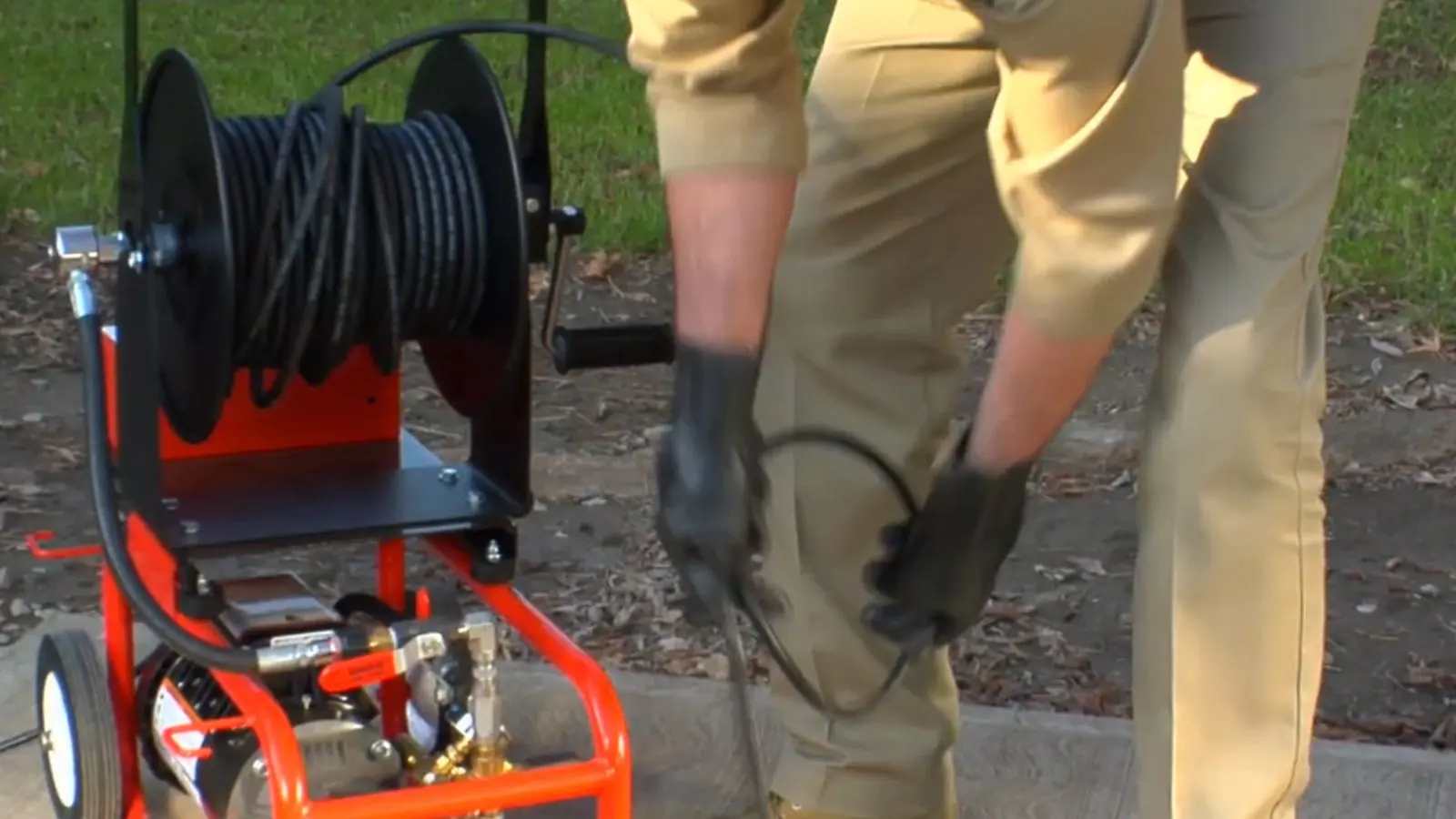
When the cable stops short and the water keeps coming up
A backup is urgent, and our emergency line answers 24/7. While you wait, stop all water use, keep people away from the low drain and note how far any cable reached, because that number tells us a lot.
A cable that reaches only part of the way is common. It may have snagged a root mass, hit a bend or bored a small hole through a thick layer of grease. Jetting is the next tool when the cable cannot finish the job.
Backup in progress: steps before the jetter arrives
These steps keep the situation from getting worse and give us the details to bring the right equipment.
- Stop flushing and running water, including the washer and dishwasher.
- Do not pour chemical cleaners down the drain. They can splash back and leave the pipe unsafe to work on.
- Keep children and pets away from standing water, which can carry waste.
- Find the cleanout and share its location with the dispatcher, but leave the cap on.
- Tell us how long the earlier cable run was and who ran it.
Call (206) 864-6558, tell us what the cable did, and we will explain whether jetting fits your drain.
How a jetter works inside the pipe
A jetting machine pumps water at high pressure through a flexible hose. The nozzle at the end has jets that point backward, and those jets pull the hose forward along the pipe. Other jets spray outward and scour the pipe wall.
This is different from a cable, which pokes a hole through the clog. Jetting washes the buildup off the whole circumference and flushes it down the line. That is why jetting suits grease, sludge and silt, and why a root-cutting nozzle can handle roots that would just grow back after a plain cable.
Cable, camera or jet: which fits which problem
Each tool has a job. This shows where jetting fits and where another method comes first.
| Method | Where it fits | Limits |
|---|---|---|
| Hand or drum cable | Sink, tub and short lateral clogs from hair, paper and soft debris | Pokes a hole and leaves grease on the wall |
| Heavy cutting cable | Roots and stubborn blockages in longer runs | Can snag in a broken or offset pipe |
| Camera on a flexible cable | Finding the cause of a repeat clog, a break or a sag | Shows the pipe but does not clear it |
| Hydro jetting | Grease, sludge, silt and roots across the whole pipe wall | Not for pipe that is already cracked or collapsed |
| Spot repair or replacement | Pipe that is broken, offset or crushed | Cleaning will not fix a failed pipe |
City sewer, big trees and what that means for your lateral
The City of Mountlake Terrace provides sewer, water and stormwater service itself. For a jetting job, that means we are working your private line, from the house cleanout toward the street. If what we find points to the city's system, we will say so, and your utility bill tells you who to contact.
Terrace Creek Park covers 60 acres along Lyon Creek, and mature trees like those reach far for water. If your lot has large trees close to the sewer line, root regrowth is a real risk. Jetting clears the pipe now, and a camera look every so often shows whether the roots are coming back before they cause another backup.
Signs that jetting is the right next step
Not every clog needs a jetter. These signs make it a good fit.
- A cable that stalls partway. Especially if it keeps stopping at the same distance.
- Clogs every two to three years. A regular cycle can stay ahead of buildup.
- Several drains slow at once. The main line is coated, not blocked in one spot.
- Roots in the pipe. Cutting and then flushing the debris out.
- Grease from a kitchen or laundry line. Hot water alone will not move it.
- A house under contract. Clearing and then inspecting the line before closing.
What affects the price of a jetting visit
Jetting is a bigger job than a basic snake. These factors decide how big.
A longer lateral or a larger pipe needs more hose, time and water.
A single kitchen branch is smaller than the main sewer lateral.
Roots, scale or a sag add work. Failing pipe can change the plan altogether.
A clean, reachable cleanout speeds the job. Without one, we may have to set up another way.
Seeing the pipe adds time and shows what jetting did.
We give a clear price before work starts, so call (206) 864-6558 for your number. Homeowners policies often cover sudden accidental damage but usually not clogs from wear, roots or buildup. Check your own policy.
Names and gas: clearing up the confusion
Hydro jetting, hydrojetting and hydra-jetting are one method. It uses water only. No gas is burned, and nothing flammable goes into the pipe.
A sewer-gas smell near a drain is a different thing. It often means a dry P-trap or a blockage that traps odor. If you smell natural gas, with its rotten-egg odor, leave the building and call your gas utility or 911 before you call us.
Old buildings, unit by unit and scheduled maintenance
Older buildings with long cast iron or clay drains tend to collect scale and silt. Slow drains or odors in one unit of a multi-unit building can come from the shared line, so jetting is often planned for the whole stack. Facilities with heavy kitchen use may schedule it on a regular cycle.
For help comparing jetting with a standard clearing, read about drain cleaning. If the main line backs up repeatedly, sewer line cleaning covers what to expect on the main. We also serve Lynnwood next door.
Questions about jetting a sewer line
Yes. The line at (206) 864-6558 is answered 24/7. If sewage is rising in a tub or floor drain at midnight, call, stop using water and tell us how far any earlier cable reached. We schedule same-day jetting when available for clogs that can wait a few hours.
Hydro-jet, hydrojet and hydra-jet all mean the same water-powered method. Gas is not involved at all. If you ever smell natural gas, leave the building, call your gas utility or 911 first, then call us.
Jetting at the right pressure with the right nozzle is gentle on sound pipe, but cracked, collapsed or badly corroded pipe can break apart under any method. That is why we often look inside the line first, especially in older homes. If the pipe is failing, we will tell you before we jet.
There is no single schedule. A line that clogs every two to three years with roots or grease can be jetted on a regular cycle before it backs up. A line that has never clogged does not need it.
Either. We can jet a single kitchen line, a laundry line or the main sewer lateral from the cleanout. The right scope depends on where the buildup sits, which we sort out on the phone and on site.
That depends on your lease and on the cause of the blockage. Tell your landlord or property manager first, since they usually control repairs to the building line. We can talk with them and give a clear price before work starts.
Yes, buyers sometimes jet and inspect the line during the purchase window. Call (206) 864-6558, mention your closing timeline and ask about same-day openings.
Standards and sources
These public references sit behind the rules and checks this page mentions.