
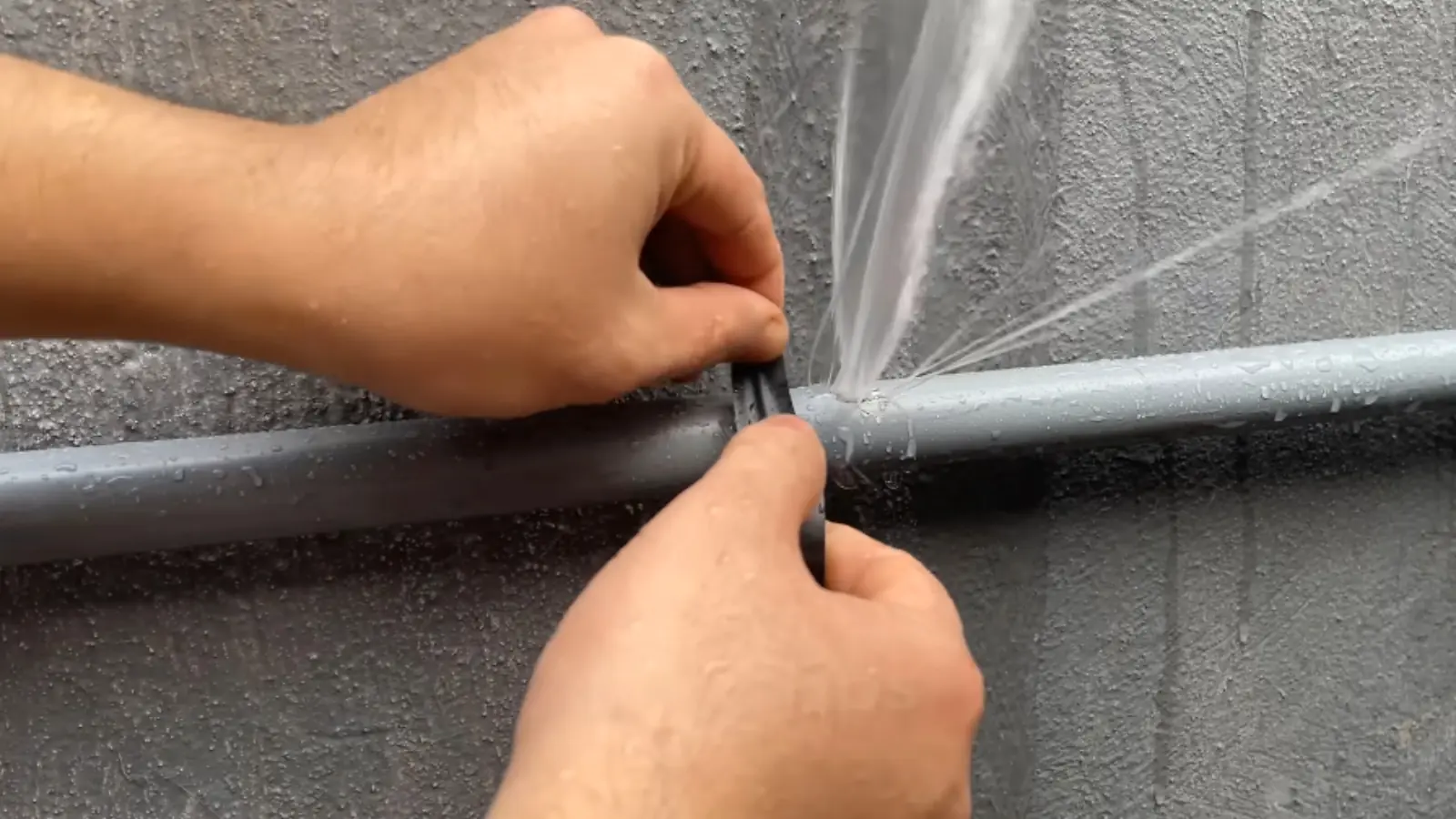
Water is leaking from a frozen pipe right now
A pipe that has split lets go as it thaws. Move fast, but safely.
- Close the main shutoff valve at the house. A quarter turn closes a ball valve, and a gate valve takes several turns.
- Open the lowest faucet in the house to drain what is left in the lines.
- Switch off power to any area with standing water only if the breaker panel is dry and you can reach it safely. Otherwise stay out and call us.
- Move belongings away from the wet area and catch drips with buckets.
- Call (206) 864-6558. Tell the dispatcher where the water is and whether the main is shut.
Why pipes freeze where they do
Water expands as it freezes, and a plastic or metal pipe has nowhere for that growth to go. The pipe often does not break at the ice. It splits where pressure builds between the ice block and a closed faucet, which is why leaks appear after thawing.
Pipes freeze first where cold air reaches them and warm air does not. In a house that means exterior walls, vented crawlspaces, garages, the attic and anything running near a leaky rim joist. A hose left on a hose bib is a classic case, because it traps water and keeps the cold in contact with the fixture.
Call (206) 864-6558, any hour, and tell the dispatcher where the pipe runs and what you can see.
Weak spots, warning signs and fixes
| Where | Warning sign | What to do before the freeze |
|---|---|---|
| Hose bib | No flow, or a drip inside the wall | Remove the hose, close the interior stop if there is one and drain the line |
| Crawlspace pipe | Frost on the pipe or cold air at the vent | Wrap with foam sleeves and seal gaps around vents and pipe penetrations |
| Garage supply line | Pipe cold to the touch near the door | Insulate the pipe and keep the door closed on freeze nights |
| Exterior wall under a sink | Trickle at the faucet on a cold morning | Open the cabinet door so warm air reaches the pipe |
| Attic line | Water stain on the ceiling after a cold snap | Add insulation over the pipe and check the water heater vent too |
Thawing a frozen pipe without making things worse
Thaw only when no water is leaking and the pipe looks intact.
Open the faucet
Open the tap on the frozen line so melting water has a place to go.
Apply gentle warmth
Use a hair dryer or warm towels, starting at the faucet end and working back toward the frozen spot.
Never use flame
No torch, no kerosene heater pointed at the pipe, no heat gun on high. They can ignite framing or burst the pipe.
Watch for leaks
As flow returns, check the whole run. If you see water at the pipe wall, close the main and call.
Find the cause
Once it thaws, add insulation or seal the draft. Otherwise the pipe will freeze again.
Before the forecast drops
- Hoses off. Disconnect and drain every outdoor hose and shut any interior hose bib stop.
- Know the main. Test your shutoff valve now and label it.
- Wrap the exposed pipes. Foam sleeves on crawlspace, garage and exterior-wall lines.
- Seal drafts. Foam any gap where a pipe enters the house, and close crawlspace vents if yours have covers.
- Open cabinets. Leave sink doors open on exterior walls overnight.
- Plan for time away. If you travel, keep the heat on above a cool setting and ask someone to check the house.
Know your shutoff before the cold arrives
Every home has a main shutoff where the supply enters the house. Find it in daylight, turn it off and on once, and tag it. A valve that has never been moved can stick, and a frozen-pipe leak is a bad time to find out.
Many homes also have fixture stops under sinks and behind toilets. Those let you cut off one line without losing water everywhere. If a stop weeps or will not turn, that is a quick repair now and a flood risk later.
For a split pipe inside a wall or crawlspace, shutting the main is the whole job until we arrive. Do not try to patch a pipe that is under pressure, and do not cut open a ceiling that is holding water. Call us and let the dispatcher walk you through what to do.
A thawed pipe is not always a safe pipe
A pipe that has frozen once can be weakened, even when it does not leak. The ice may have stressed a joint or the pipe wall. If a line froze solid and then thawed, watch it closely for a few days and look at joints and valves for weeping.
If a line freezes repeatedly in the same spot, no amount of wrapping fixes the underlying problem. It may need rerouting or a larger repair, and that is a conversation for our dispatcher. Our water line repair page explains what that work involves.
Call right away if
Call at once if a pipe is spraying, if water is coming through a ceiling, or if there is water near the electrical panel or outlets. Call if the water pressure drops across the house and the main is open, or if the water heater discharge is dripping steadily.
If you smell gas at any point, leave the building and call the gas utility or 911 first, then call us. We also cover neighboring Lynnwood. You can call (206) 864-6558 at any hour, and we give a clear price before work starts.
What this means in Mountlake Terrace
Our weather runs wet from fall to spring, with the occasional winter freeze. That pattern catches people out, because a freeze may come only once or twice a season and the pipes are not ready. The usual weak spots are hose bibs, crawlspace lines and pipes in garages, so check those before the forecast turns cold.
When water is escaping, ask first where it is coming from. A break in the city water or sewer system is handled by City Public Works at 425-670-8264, Monday to Friday, 7 a.m. to 3:30 p.m. After hours, the county non-emergency line is 425-407-3999. A break inside your property, past your own shutoff, is a plumbing call to us. We cannot tell by phone which side you are on, but your main valve will.
Cold weather pipe questions
A slow drip on a line that runs through an exposed area can help, because moving water freezes less readily. It is a backup, not a plan. Insulation and keeping warm air around the pipe do more. Pick the faucet farthest from where the line enters the house.
Yes, if the area is dry and you keep the dryer moving along the pipe from the faucet side back toward the frozen spot. Never use a torch, a heat gun on high or any open flame. Stop if you see water on the floor near an outlet and call us.
A split pipe usually shows after it thaws, as a spray, a drip from the pipe wall, a wet ceiling or a drop in water pressure. If water appears when the ice melts, close the main shutoff right away and call us.
Tell the landlord or property manager first, in writing, and shut the main if water is flowing. Responsibility depends on your lease and on the cause. We can speak with the property manager and explain what we find.
For a break in the city system, call City Public Works at 425-670-8264, weekdays from 7 a.m. to 3:30 p.m. After hours, call the Snohomish County non-emergency line at 425-407-3999. If water is flowing inside your property, close your own main and call us.
Insulation slows heat loss. It does not create heat. In a short, mild freeze it often holds, but in a long cold spell an insulated pipe in an unheated space can still freeze. Pair foam sleeves with sealed gaps and warm air where you can.
Standards and sources
These public references sit behind the rules and checks this page mentions.