
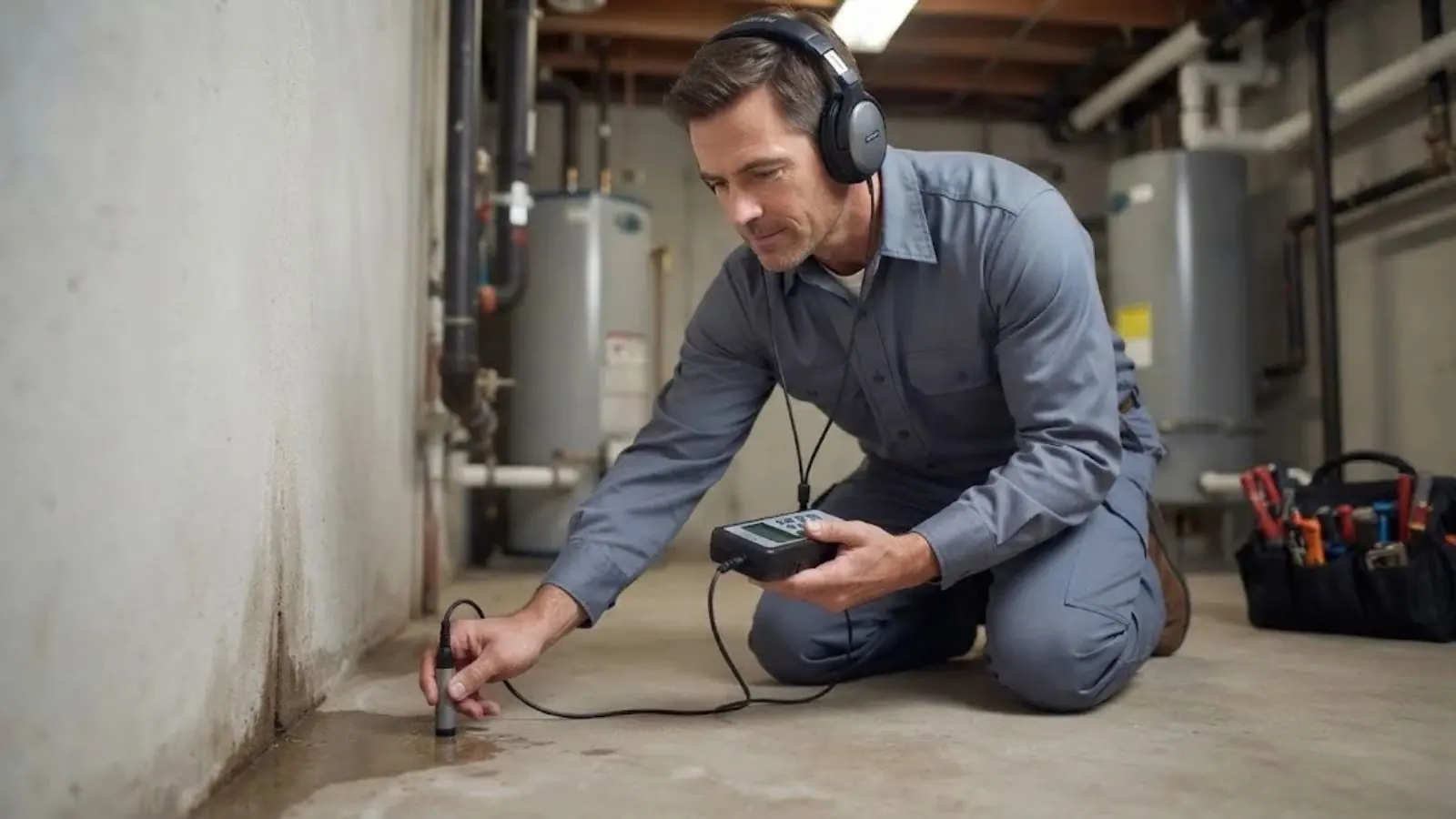
A pinhole is a symptom of the pipe, not just a spot
Copper pipe lasts a long time, so when it leaks it is usually wearing out from the inside. A pinhole means the pipe wall has thinned at one spot, and the thin spot rarely sits alone.
Joint leaks have a different story. A soldered or compression fitting can seep from a weak solder joint, movement, or a loose nut. A joint repair is often smaller than a pinhole repair, because the pipe on either side is still sound.
If a copper pipe is leaking right now
Stop the water first, then look for the cause.
- Close the main water shutoff valve, usually where the line enters the house or at the meter.
- Open the lowest faucet in the house to drain the line and relieve pressure.
- Keep water away from outlets, the panel and anything plugged in. Shut the breaker only if you can reach it dry and safely.
- Move belongings away from the wet area and soak up standing water with towels.
- Take a photo of the leak for your records, then call (206) 864-6558.
[[tel|Call (206) 864-6558]] and describe the damp spot or the sound. We will help you decide how urgent it is.
Which fix fits which leak
| Situation | Temporary option | Lasting repair |
|---|---|---|
| Small pinhole in a straight run | Repair clamp or epoxy putty | Cut out the section and replace it |
| Weeping soldered joint | Wrap the joint and monitor it | Redo the joint or replace the fitting |
| Leak at a compression nut | Snug the nut a little | Replace the ferrule or the fitting |
| Several pinholes along one run | Clamps at each spot | Replace the run, or repipe the branch |
| Pipe split from a hard freeze | Shut off and drain | Replace the damaged length |
| Pinholes in many rooms | None that last | Consider a repipe |
Why a temporary fix is only temporary
A clamp squeezes a rubber pad against the hole. Putty fills it. Neither makes the pipe wall thicker, and neither fights the cause. The water pressure that found the first weak spot will find the next one.
Self-fusing tape and push-on sleeves work the same way. They hold until the metal under them keeps thinning or the surface shifts. If you apply one, treat it as a way to get through the night, not the repair.
Watch the patch for a day. A damp edge, a stain that grows, or a drip on the paper towel below it means the pad is failing. Shut the water again and call.
Where copper leaks tend to start
Hot water lines wear faster than cold ones, because heat and flow speed both attack the inner wall. Elbows and tight bends also suffer, since water hits the outer curve harder there.
Joints fail for other reasons. Flux left inside a soldered fitting can keep eating at the copper. A line that vibrates against a joist or a strap can loosen a fitting over the years. A pipe that was frozen once can crack a joint without showing it until later.
Pipes near the water heater, under sinks and inside crawlspaces are the ones to check first. A flashlight and a dry paper towel pressed against suspect spots will show a slow weep that your eyes miss.
Clues that the leak is bigger than it looks
Check these before you decide a single patch is enough.
- Green or white crust on the pipe. Corrosion often covers more than the visible spot.
- A hissing sound with every tap closed. Water is escaping somewhere you cannot see.
- Damp drywall, peeling paint or a musty smell. The leak has been going longer than you think.
- Hot water taking longer to arrive. A hot line may be leaking inside a wall.
- Low pressure at the farthest fixtures. Water is leaving the pipe before it arrives.
- A water meter that moves with everything off. A leak is running, somewhere.
What a proper copper repair involves
A pipe repair is not just a patch.
Isolate and drain the section
The valve is closed and the line is drained so the copper can heat evenly.
Cut back to sound pipe
The bad length is removed, and the cut ends are cleaned and deburred.
Join the new piece
A new length is soldered, or joined with a push-fit coupling rated for the pipe, depending on the location.
Test, then check nearby
The line is pressurized, the joint is checked, and the pipe on either side is examined for more thin spots. See repiping if the run needs more than a patch.
When a repipe is the better call
If pinholes keep showing up in different rooms, or the pipe is thin everywhere you look, spot repairs turn into a string of visits. A repipe replaces the worn runs once instead of chasing the next leak.
That decision depends on the pipe, the access, and how many leaks you have had. A technician can look at the pattern and tell you if a spot repair is enough, or if the cheaper choice over time is a bigger one.
Have this ready when you call
A few details let the dispatcher judge how urgent the leak is.
Say if it is under a sink, in a crawlspace, in the garage or behind a wall.
A fine spray, a steady drip, a damp stain or a green crust each point to a different cause.
Tell us if you closed the main valve and if the pressure has dropped since.
Copper looks reddish or green. Gray and dull pipe may be galvanized, and white or cream plastic is likely CPVC.
Mention if the leak sits behind finished drywall or a locked door.
What this means in Mountlake Terrace
The first homes here went up in 1949 as small cinderblock houses, and many were renovated and expanded over the decades. That mix means a single house can have original plumbing, copper from a remodel, and newer additions in one building. Ask for a pipe-material check, so a repair at one spot does not leave an older section waiting to leak next.
The City of Mountlake Terrace supplies water and bills every other month. A slow pinhole inside a wall can run for weeks without a stain, and the bill is often the first sign. Compare your last few statements, and call if usage has climbed with no change in the household.
Copper leak questions, answered
Usually the metal wears from the inside. Fast-moving water, hot water, and chemistry in the supply can all pit the wall until a tiny hole opens. Poor soldering or flux left inside a joint can do it too.
Often, yes. The same conditions that wore one spot are acting along the rest of the pipe. A repair at the leak does not change the pipe next to it, so ask for the nearby run to be inspected.
It is a stopgap. A clamp or putty can slow or stop a small leak for a while, but it cannot restore the pipe wall. Plan the real repair soon, and watch for new drips.
Soldering needs a dry pipe, clean copper, correct flux and a torch used safely near wood framing. Water in the pipe will keep the joint from heating. If any of that is a doubt, call a plumber.
It can. Water that escapes inside a wall still passes the meter, so a steady rise in use shows up on the every-other-month bill. We also help with plumbing calls in Lynnwood and the same signs apply there.
Usually the owner, but it depends on your lease. Tell the landlord or property manager right away and shut the water if it is active. If they like, we can talk to them directly about what we found.
Standards and sources
These public references sit behind the rules and checks this page mentions.