
Snaking a toilet, step by step
Water near the rim is a good moment to stop and think. A closet auger is easier to use when the bowl is not about to spill, so start by dealing with the water.
Stop the flow and protect the floor
Close the supply stop behind the toilet and lay towels around the base. Lift the tank lid and lower the flapper to stop more water entering.
Lower the water if the bowl is full
Bail extra water into a bucket until the level sits an inch or two below the rim. Wear gloves.
Feed the auger head into the trapway
Set the curved tip in the bowl outlet and push the cable in while turning the handle slowly clockwise.
Work the clog, then pull it back
When you feel resistance, crank to hook or break it up. Pull the cable back out and clean the head.
Flush once to test
Open the supply stop and flush. If water rises, stop and wait. Repeat only if the level behaves.
Plunger, closet auger or drain snake
Match the tool to the clog and the fixture.
| Tool | Fits | Skip it when |
|---|---|---|
| Flange plunger | Soft clogs in the bowl or trapway | The bowl is cracked or nearly overflowing |
| Closet auger | Hard clogs in the trapway, wipes, toys | The cable meets a hard stop deep down |
| Drain snake (long cable) | Sink, tub and floor drains | The fixture is a toilet bowl |
| Camera and machine cable | Blockages beyond the trap, repeat clogs | A single-use clog clears with the auger |
Why the closet auger exists
A toilet drain is not a straight pipe. Behind the bowl sits a molded trapway shaped like an S, and it is smaller than most people expect. A plain drain snake can scratch the glaze, get stuck in a curve or go the wrong way entirely.
The closet auger has a short, rigid shaft and a rubber or vinyl sleeve. The sleeve protects the porcelain, and the angled head threads through the S-bend. It is the right first tool because most toilet clogs live within the first few feet.
Common blockers and how they behave
Too much toilet paper makes a soft, pulpy clog that a plunger often clears. Wipes, cotton swabs and dental floss behave differently, because they tangle and hold on to the trapway wall. A child's toy or a stray razor cap is a hard stop that a plunger only wedges tighter.
If you can feel something solid on the auger tip, withdraw the cable slowly and see what comes with it. Sometimes the object hooks and comes out with the cable. Other times you will need to pull the toilet off its flange, which is a job for a plumber, since the wax ring and closet bolts have to be reset.
When it is not the toilet
The main clue is what else is slow. If the tub gurgles when you flush, or the washer drain bubbles in the bathroom sink, the blockage is likely downstream in a shared drain, not in the bowl. Water that backs up in the lowest fixture first, such as a basement floor drain or shower, is another sign.
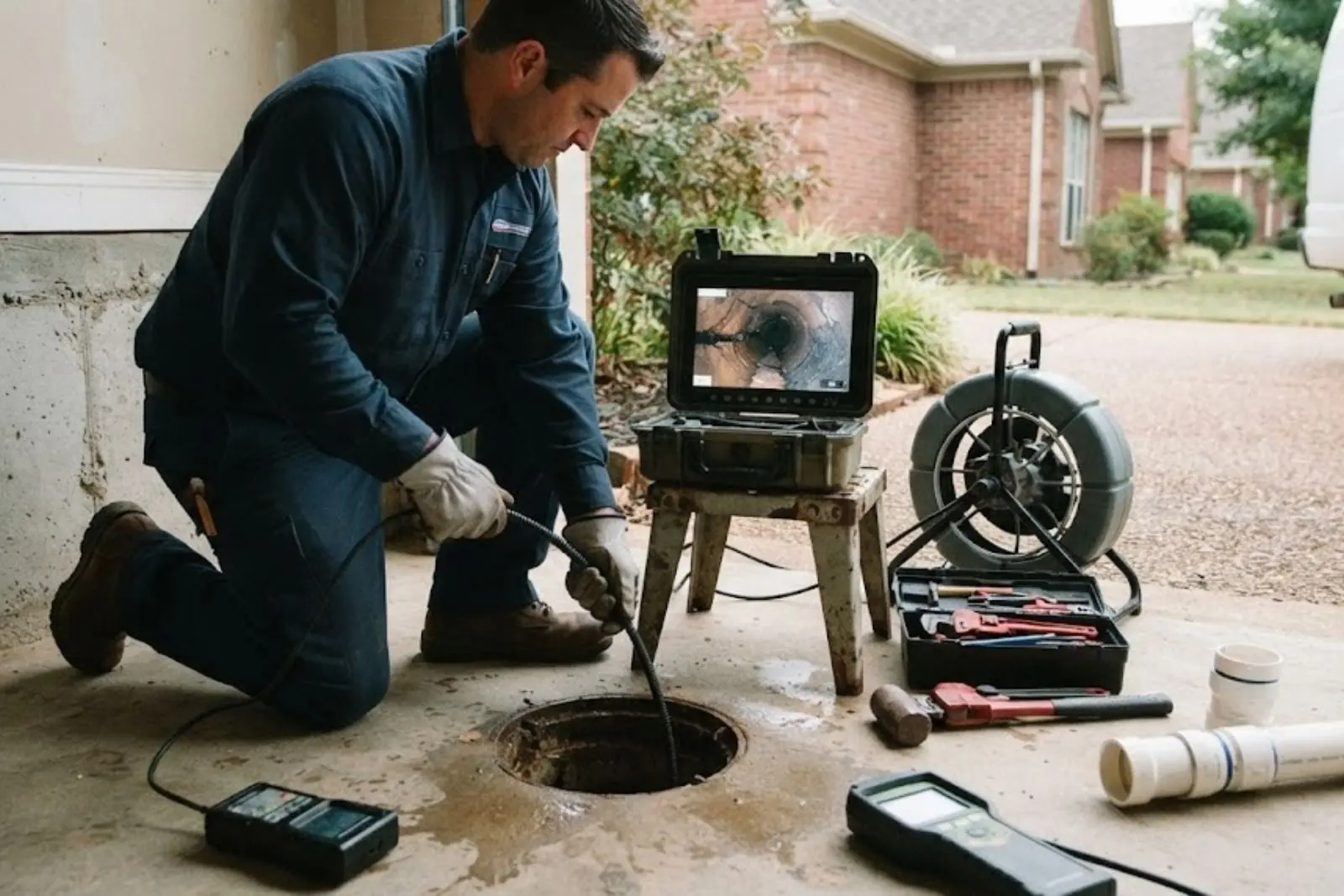
In that case no amount of auger work will help. Find the cleanout, a capped pipe in the basement, garage or yard, and leave the cap alone. A longer cable or a camera is needed, so call for sewer line cleaning instead of forcing a short tool.
Signs the clog sits past the toilet
- Several fixtures drain slowly. Check the bath sink, tub and washer line.
- Gurgling after a flush. Air is fighting past a blockage.
- Floor drain or tub fills when you flush. Sewage seeks the lowest outlet.
- Sewer smell in the house. A partly blocked main pushes gas back.
- The auger runs long with no change. The clog is beyond the hand-tool reach.
- The toilet clears, then fails the next day. Something is still holding water back.
[[tel|Call (206) 864-6558]] and describe which fixtures are slow so the dispatcher can plan the right tools.
What to leave alone
Do not force the auger once it binds, since a bent cable or a cracked bowl costs more than a plumber call. Skip acid or strong drain openers entirely. And never flush wipes labeled flushable, because they are a common cause of repeat toilet and main line clogs.
When to stop and call
Call right away if sewage is rising, if the bathroom floor is wet and you cannot stop it, or if more than one fixture is affected. Turn off the supply stop and keep everyone out of the standing water, since sewage carries germs.
For a toilet that keeps clogging, a loose base or a leak at the floor, our toilet repair service covers the wax ring, flapper and fill valve as well as the clog. We give a clear price before work starts. If you live just south of Mountlake Terrace, see our Lynnwood coverage.
What this means in Mountlake Terrace
About 41 percent of occupied homes in Mountlake Terrace are rented, and a toilet clog is one of the most common calls from a tenant. A single clog is usually a simple fixture problem, so plunge, try a closet auger and tell the landlord in writing if neither works. If the cause is a line problem, repairs belong with the property owner.
If you suspect the break is in the city system, such as water or sewage coming up in several homes or the street, call City Public Works at 425-670-8264, open 7 a.m. to 3:30 p.m., Monday to Friday. After hours call the Snohomish County non-emergency line at 425-407-3999. If the clog is inside your own plumbing, call us at (206) 864-6558.
Toilet snaking questions
A standard drain snake is a bare metal cable that scratches the porcelain. A closet auger has a vinyl sleeve and a curved head built to pass through the toilet trapway. Use the auger for the bowl, and keep the longer snake for sinks and floor drains.
Most closet augers extend a few feet from the bowl, which covers the trapway and the first stretch of the drain. If you feel the cable meet firm resistance that does not break up, or the cable runs out with no change, stop. A clog beyond that point needs a longer cable.
Repeated clogs after a clear usually mean something stays behind. It could be a stubborn wad, a toy or wipes lodged in the trapway, a partly blocked vent, or a partial blockage in the main line that backs water up when you flush.
We recommend against it. Chemicals can sit in a clogged bowl, splash on skin, damage the wax ring seal over time and make later work hazardous. A plunger and a closet auger are safer for a bowl clog.
Tell the landlord or property manager first, since your lease usually decides who pays for plumbing repairs. A quick plunge for a simple clog is reasonable, but do not push an auger hard if you could damage the bowl. We can speak with the property manager about what we find.
A clog in your own toilet or the pipe on your property is yours to deal with. If water or sewage is backing up in several fixtures and your neighbors have the same trouble, a line break in the city system is possible. Check the city numbers in the section below.
Standards and sources
These public references sit behind the rules and checks this page mentions.