
Plumbing does not just wait to break
A common belief is that plumbing needs no attention until something fails. In practice, most big losses start as small, slow problems that nobody looked for. A weeping supply stop, a stuck shutoff or a damp cabinet floor is easy to fix when found early.
The plan below is built for homeowners, not plumbers. Each task takes minutes, needs few tools and has a clear point where you hand it off. If you want a second pair of eyes on any step, call (206) 864-6558 and we will tell you what to look for.
Four seasons at a glance
| Season | Main tasks | What you are watching for |
|---|---|---|
| Fall | Test the main shutoff, disconnect hoses, check gutters and the water heater | Seized valves, trapped water in hose bibs, rust or drips at the tank |
| Winter | Insulate exposed pipes, open cabinet doors on cold nights, know your shutoff | Frozen lines in crawlspaces, garages and outside walls |
| Spring | Run the meter test, inspect under sinks, check the yard for soggy spots | Slow leaks, soft cabinet floors, wet lawn near the supply line |
| Summer | Clean aerators, test toilets with dye, flush the water heater | Mineral crust, silent toilet leaks, sediment noise |
If a shutoff will not turn or a pipe looks wrong, call (206) 864-6558 and describe it to our dispatcher.
Find and test your shutoffs first
Every other task on this list gets easier when you can stop the water in seconds.
Locate the main
It is usually where the supply line enters the house, often in a utility area, garage or crawlspace access.
Turn it fully off
A ball valve turns a quarter turn. A gate valve takes several rotations. Do not force either.
Open a faucet to confirm
The flow should fade to nothing. If it keeps running, the valve is not sealing.
Restore and label
Open the valve slowly, bleed air at a faucet and tag the handle so anyone in the house can find it.
The fall walk-through
Do this before the first hard freeze and before the rains settle in.
- Disconnect hoses. A hose left on a hose bib can trap water behind the wall and freeze.
- Look under every sink. Check supply stops, P-trap joints and the cabinet floor for stains or softness.
- Inspect the water heater. Look for rust on the fittings, a dripping discharge pipe and straps that are tight to the wall.
- Check the crawlspace pipes. Foam sleeves should be intact, and no pipe should sit against an open vent.
- Clear the gutter outlets. Downspouts should carry water away from the foundation and from the sewer cleanout.
- Note slow drains. A drain that gurgles or drains lazily in fall will not improve in January.
Winter and spring: cold nights, then soft ground
Cold snaps are rare here, which is why pipes get caught unprepared. Slip foam sleeves over exposed lines in the crawlspace and garage. On a hard-freeze night, open the cabinet doors under kitchen and bathroom sinks on outside walls so warm room air reaches the pipes.
In spring, look at what the wet season left behind. A soggy patch in the yard that stays wet in dry weather can mean a leaking supply line. A musty smell or a swollen cabinet base under a sink means a slow drip has been running for a while. Fix the small drip now, because wood that stays damp keeps getting worse.
The two-minute meter test
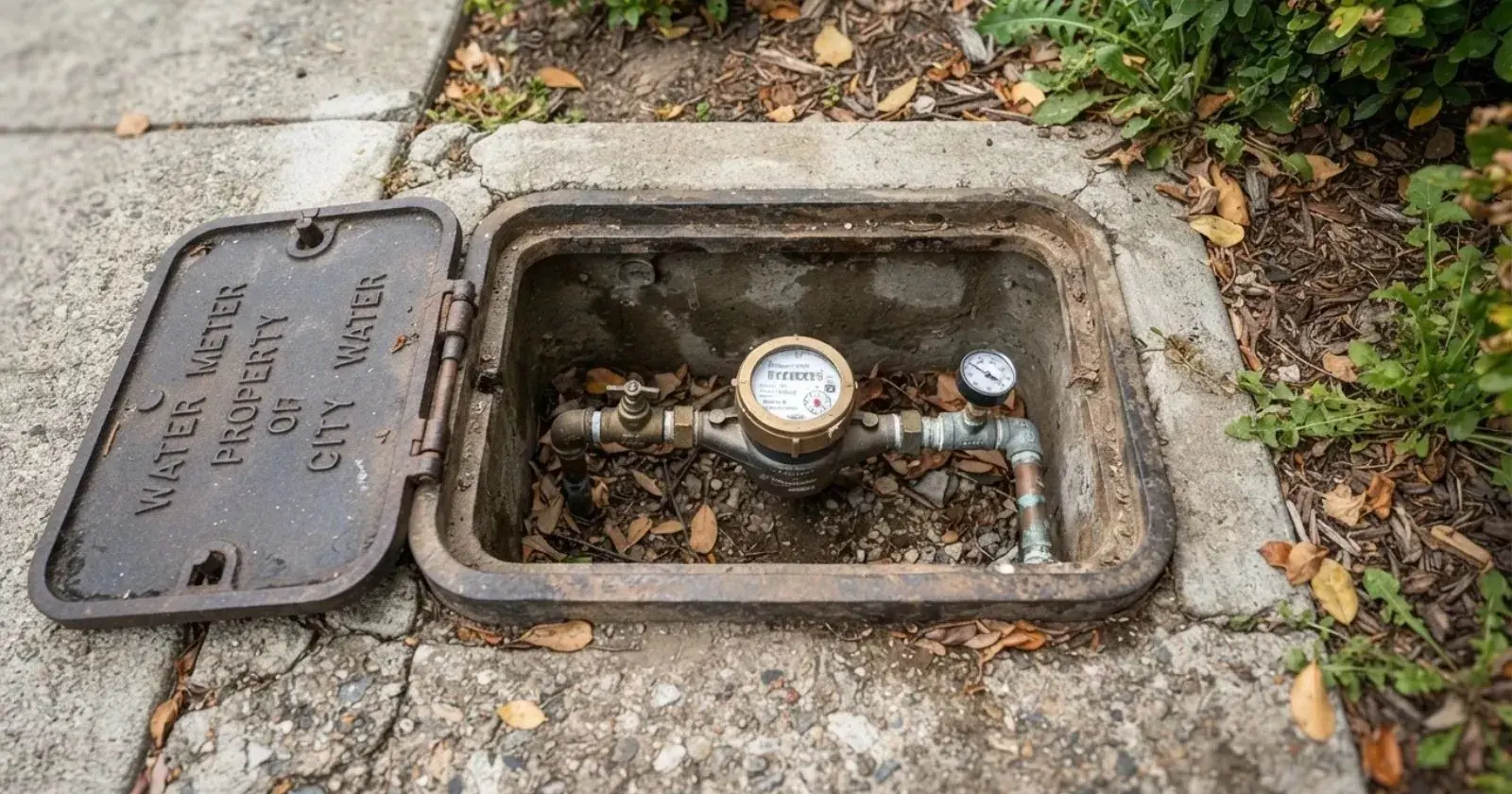
Turn off every fixture, the ice maker and the irrigation. Open the meter box and look at the leak indicator, usually a small triangle or dial. If it moves while nothing is running, water is escaping somewhere.
Then close your main shutoff and check again. If the indicator stops, the leak is inside your house. If it keeps moving, the loss is between the meter and your valve, and that needs a plumber.
Summer is for drains and the water heater
Summer is the easy season to work in a crawlspace or garage. Flush a few quarts from the water heater to clear sediment, and check that the T&P valve discharge pipe points down and is not capped.
Pour hot, not boiling, water down rarely used drains to refill the P-trap. A dry trap lets sewer gas into the room. Slow drains are the cue to look at drain cleaning before they turn into a backup. We also cover Lynnwood plumbing calls next door.
A small kit worth keeping on a shelf
These cost little and save the first awkward hour of a leak.
For supply stops, hose bibs and tightening a loose trap nut.
For threaded joints and dripping faucet stems.
A flange plunger for toilets, a cup plunger for sinks.
For checking dark cabinet corners and catching a slow drip.
A written label on each valve saves minutes when anyone else is home.
Where DIY stops
Stop and call if a shutoff will not close, if a supply stop weeps after tightening, or if you find a green crust on a copper joint. Stop too if the discharge pipe is dripping steadily or a ceiling shows a stain that spreads.
Never open a wall near an electrical box that is wet. If you smell gas, leave the building and call the gas utility or 911 first, then call us. We cannot service gas lines.
What this means in Mountlake Terrace
The Puget Sound pattern is a long, wet stretch from fall into spring, with the occasional winter freeze. That mix shapes the checklist. Rain gets into crawlspaces and drain trenches, so check for damp and for gutters dumping near the foundation. Freezes hit hose bibs, crawlspace lines and garage pipes, so those are the first things to protect before December.
This is also earthquake country, and a water heater that tips can tear its own gas or water connections. Strapping the tank is a small job with a large payoff.
The city provides water, sewer and stormwater service inside its limits and bills every other month. A leak can run for weeks before a bill shows it, so run the meter test in the gap between bills.
Maintenance questions we hear from homeowners
Twice a year is a good habit, and fall is the easiest time to remember. Turn it fully off, then fully on, and watch for drips at the stem. A valve that has never moved can seize, so you want to learn that on a quiet afternoon and not during a leak.
Many homeowners do. You attach a hose to the drain valve, run the water to a safe spot and let sediment flush out. If the drain valve is stuck, leaking or plastic and brittle, stop and call us. Forcing it can turn a routine job into a leak.
The meter test. Turn off every fixture and appliance that uses water, then look at the meter's leak indicator or low-flow dial. If it keeps moving, water is going somewhere. Call us, and we can narrow down where.
Your lease controls it, but a few are usually reasonable for a tenant, like clearing a hair-clogged tub drain or replacing a toilet flapper. Anything involving a water heater, shutoffs or behind-wall pipes belongs to the landlord. Report problems in writing and we can speak with the property manager.
Inside city limits, the City of Mountlake Terrace itself provides water, sewer and stormwater service. Your utility bill comes every other month. That timing is why a quick meter test between bills is worth the two minutes.
Earthquake straps are a basic hardware job, but they need to bite into studs or masonry, and gas or electric connections must stay undisturbed. If the heater is in a tight closet or you are unsure about the wall, call us and we can look at it.
Standards and sources
These public references sit behind the rules and checks this page mentions.