
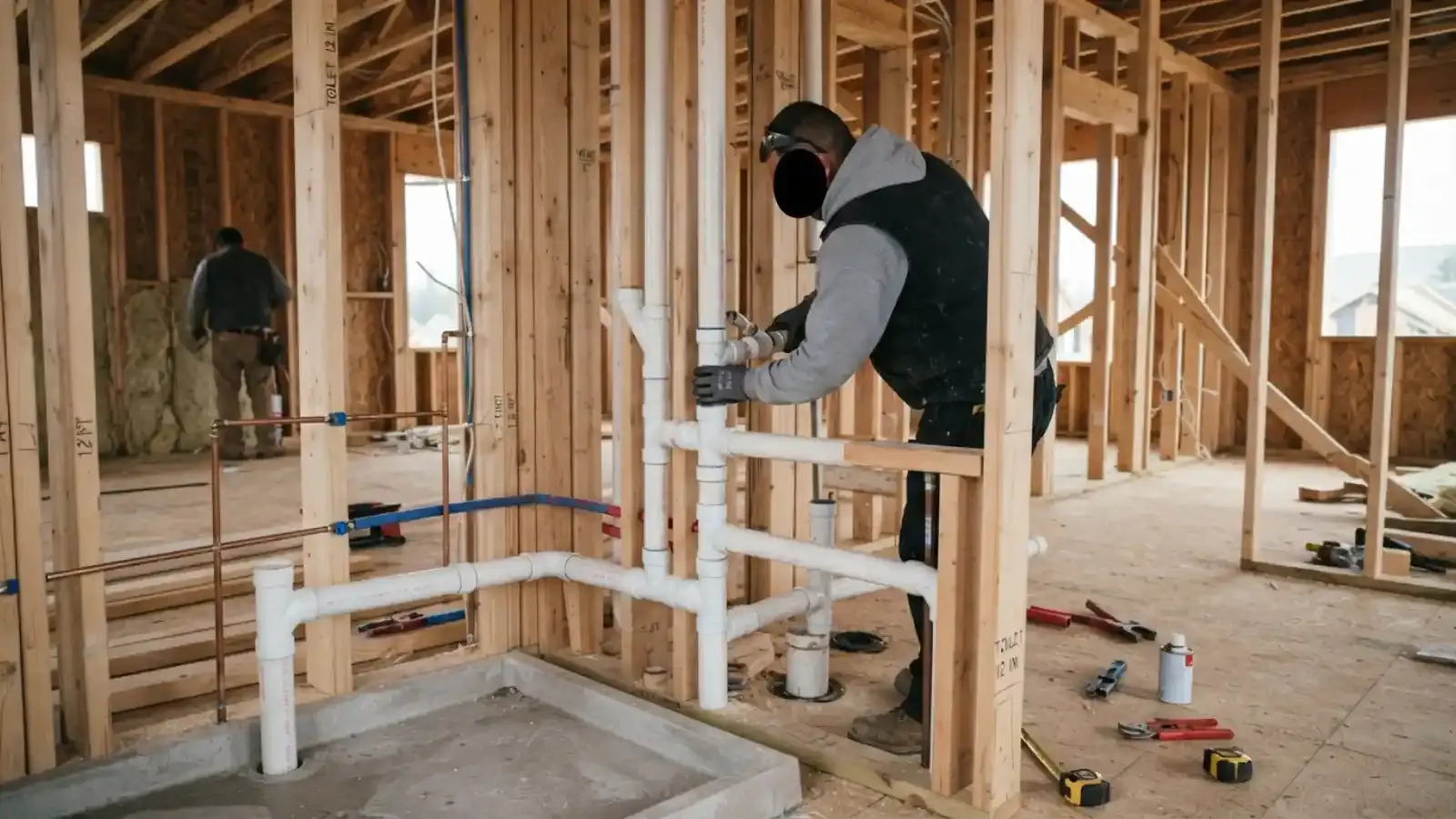
Three systems, one set of walls
Open a wall in any house and you will see pipes of different sizes and materials running together. They are not one network. The supply system pushes clean water in under pressure. The drain system lets used water leave by gravity. The vent system lets air in behind the water so the drains can flow.
A problem in one system rarely behaves like a problem in another. A dripping faucet is supply. A gurgling tub is usually drain or vent. A rotten smell from a floor drain can be a dry trap or a vent issue. If you want a second opinion on which it is, call (206) 864-6558 and describe the symptom.
Supply: the pressurized side
Water enters through a service line, passes the meter and the main shutoff, and splits into cold and hot branches. Hot water runs through the water heater first. Many homes have a pressure regulator near the main to keep pressure at a safe level inside the house.
Supply pipes are typically copper, PEX or, in older homes, galvanized steel. Each fixture connects through a small supply stop. When pressure fails or water stains appear, the cause is almost always on this side, and the fix starts with the nearest shutoff.
Call (206) 864-6558 and tell us what the pipes are doing. We can usually tell whether it is a supply, drain or vent problem.
What each part does and where it lives
| Part | Job | Where to find it | Typical problem |
|---|---|---|---|
| Main shutoff | Stops all water to the house | Where the supply enters the building | Seized handle, drips at the stem |
| Supply stop | Stops water to one fixture | Under sinks and behind toilets | Weeping stem, stuck valve |
| P-trap | Holds a water seal against sewer gas | Under sinks, tubs and showers | Clog or dried-out seal |
| Cleanout | Gives access to the drain line | Outside the house or in a basement or crawlspace | Capped and forgotten |
| Vent stack | Admits air to the drain system | Through the roof | Blocked by debris, causing gurgles |
| Water heater | Heats stored or flowing water | Closet, garage or crawlspace | Leaks, no hot water, noise |
Drain and vent: gravity needs air
Every fixture drains through a trap, then into a branch line that slopes toward a larger stack. Branches join the main drain, which leaves the house as the sewer lateral. The slope is gentle but steady, and a sag or a root can ruin it.
The vent runs the other direction, up through the walls and out the roof. A vent that clogs shows up as slow drains, gurgling, or trap seals that vanish. If several fixtures slow at once, the trouble is likely in the main line, which is a drain cleaning question and not a fixture one.
Trace your own system in an afternoon
Twenty minutes with a flashlight tells you more than a guess ever will.
Find the main
Locate the shutoff where the supply enters the house, turn it off and on and tag it.
Find the cleanout
Look outside for a capped pipe, or check the basement or crawlspace. Do not remove the cap if the line is backed up.
Locate the water heater
Note its age, its fuel type, the discharge pipe and its shutoff.
Check each sink and toilet
Look at the supply stop and trap. Mark any that are corroded or damp.
Look at the roof vent
From the ground, spot the vent stack above the roofline and note if anything covers it.
Where the sewer and the street meet your house
Past the house wall, the drain becomes the sewer lateral, the pipe that runs under the yard to the sewer main in the street. The lateral is usually your responsibility, from the house to the connection. The main in the street belongs to the utility.
That split matters in a backup. If every drain in the house is slow and a cleanout at the yard shows standing water, the blockage is in the lateral or further out. Check your utility bill for who to call about the street side, and call us if the line inside your property needs clearing.
Roots, sags and old joints are the usual causes of lateral trouble. A camera on a flexible cable shows the pipe wall and any breaks, so you can see the problem instead of guessing at it.
Safe to try yourself, or hand it off
A simple rule works. Try only what you can undo if it does not work.
- Try it: toilet flapper or fill valve. Shut the stop, flush, and swap the part.
- Try it: sink trap clog. Put a bucket under it, loosen the slip nuts, clear it and reassemble.
- Try it: faucet aerator. Unscrew it, rinse the mineral crust and replace it.
- Call: anything behind a wall. A leak you cannot see needs a plumber who can find it.
- Call: the water heater. Gas, venting and the T&P valve are not DIY.
- Call: the main drain or sewer. Repeated backups mean the problem is beyond the fixture.
Work you can see versus work you cannot
A homeowner can replace a part and test it in minutes. The risk rises when work is hidden. A badly made joint in a wall may hold for months and fail later with no warning, flooding a room you cannot see into.
That is why permits, inspections and a licensed plumber exist. For new fixtures or moved lines, see our plumbing installation page.
Stop and call us if
Stop if you see water spreading from a pipe you cannot reach, a ceiling that bulges, or water near the electrical panel. Stop if a valve will not close or a pipe wall looks corroded through.
If you smell gas, leave the building and call the gas utility or 911 first, then call us. We do not service gas lines. We also cover Lynnwood plumbing calls next door, and our line is open 24/7.
What this means in Mountlake Terrace
Washington adopts the 2021 edition of the Uniform Plumbing Code, published by IAPMO, with state amendments in WAC 51-56. In practical terms, that is the standard behind how a drain is pitched, how a fixture is vented and how a water heater is connected. You do not need to read it, but you can ask a plumber how their work follows it.
The city permit center at City Hall, 23204 58th Ave W, lists plumbing among its permit types. The city page does not say which jobs need one. Permit rules vary, so ask the city permit center before the work starts. The number is 425-776-1161.
Basics homeowners ask about
The drain carries waste out, and the vent lets air in behind it. Without a vent, water in the drain pulls a vacuum, slows down and can siphon the water out of the trap. The vent also lets sewer gas escape through the roof instead of into your room.
The main shutoff stops water to the whole house. A fixture stop, sometimes called a supply stop, is the small valve under a sink or behind a toilet that stops water to one fixture. Knowing both lets you contain a leak without losing water everywhere.
Replacing a toilet flapper or fill valve, clearing a sink trap, changing a faucet aerator and swapping a showerhead are common ones. Anything involving gas, a water heater, a main line or work behind walls is better handed to a licensed plumber.
Your lease decides, but the landlord generally owns the pipes, the water heater and the shutoffs. A tenant may handle small things like a plunger clog. Report leaks and no-hot-water in writing, and we can talk with the property manager.
Washington adopts the 2021 Uniform Plumbing Code, published by IAPMO, with state amendments. Permit rules vary, so ask the city permit center at 425-776-1161 before the work starts.
Pressure drops where pipes narrow, corrode or clog with mineral buildup. A faucet with weak flow may only need a clean aerator, while a whole-house drop can point to a partly closed main valve or a failing pressure regulator. A plumber can test it with a gauge.
Standards and sources
These public references sit behind the rules and checks this page mentions.